If you run a sheet metal shop, you already know the press brake demands respect. But the numbers still stop people cold: in the United States alone, press brakes cause more than 350 amputations every year — and those are only the reported cases. "Inadequate machine guarding" has been a perennial top-10 OSHA violation; in 2016, 88% of those violations were classified as "serious," with fines topping $7 million a year. And fines were never the real cost. A serious accident shuts down production, triggers lawsuits, and forces you to replace skilled operators you can't easily rehire. Add it up, and one bad day can cost more than several new machines.
Why the press brake is so dangerous
It comes down to one sentence: the danger zone is open by design. Bending, by its nature, puts the operator's hands close to the bend line. When you're forming small parts, fingers ride almost against the tooling. Add a backgauge moving at high speed, sheet that can kick up without warning, and the unpredictable choreography of several operators working around one machine — and the risk becomes structural. No amount of "being careful" fixes a structural risk.That's an engineering problem, and it needs an engineering answer.
Guarding is a trade-off with productivity
Look at how guarding technology evolved, and you'll see the same negotiation repeating: how do you keep people safe without strangling throughput?
The earliest answer — fixed barriers plus two-hand control — is safe on paper. In practice, the barrier gets in the way of loading parts, and two-hand operation slows everything down. Operators don't like it. And a guard nobody wants to use is, functionally, no guard at all.
The safety light curtain replaced walls with invisible infrared beams: hand in, the machine stops; hand out, the cycle can resume. When parts kick up during forming and trip the curtain, muting or floating blanking lets the workpiece pass through — the forming part itself becomes the barrier at the point of operation. Elegant logic: don't block the path, block the danger.
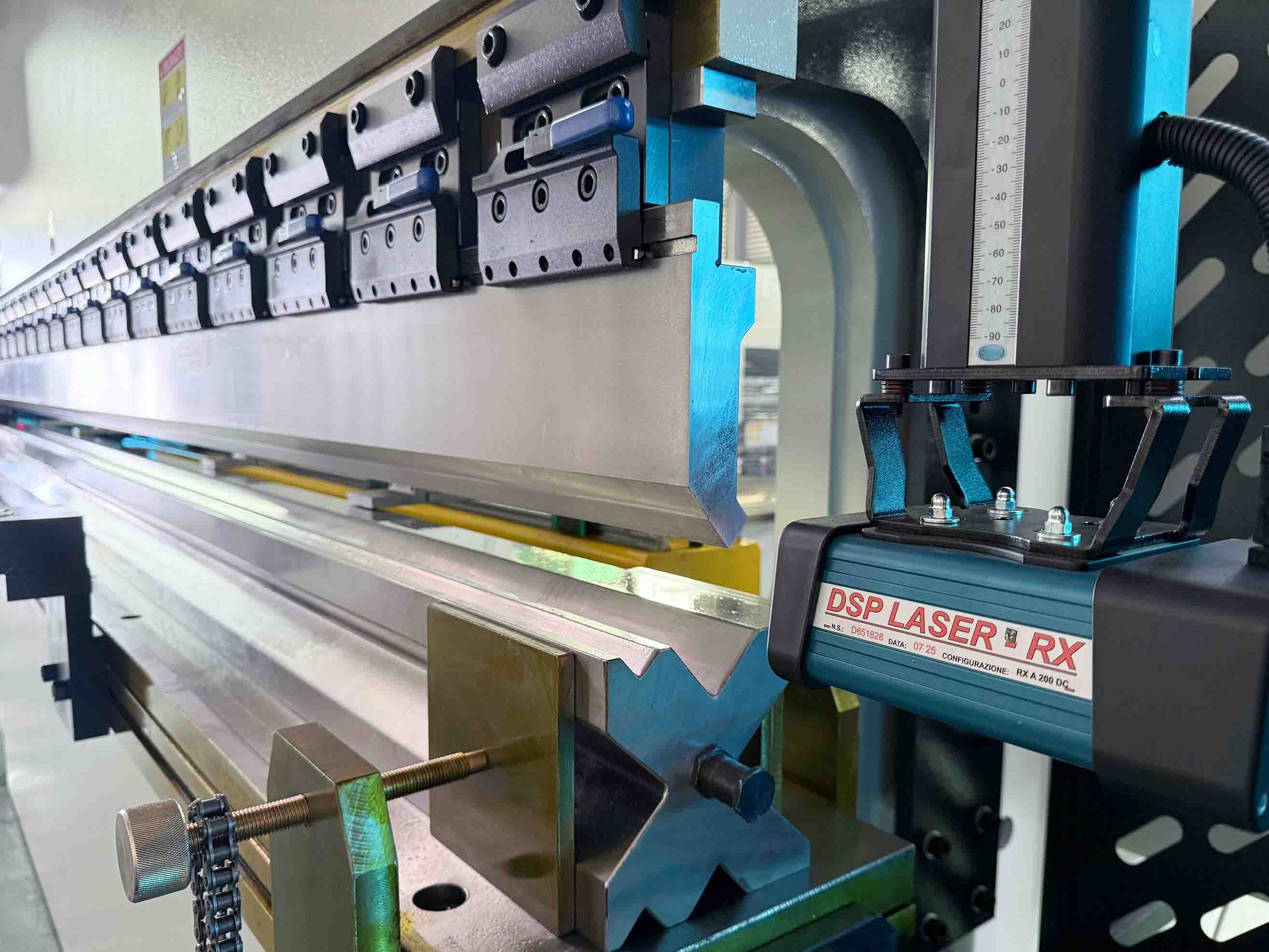
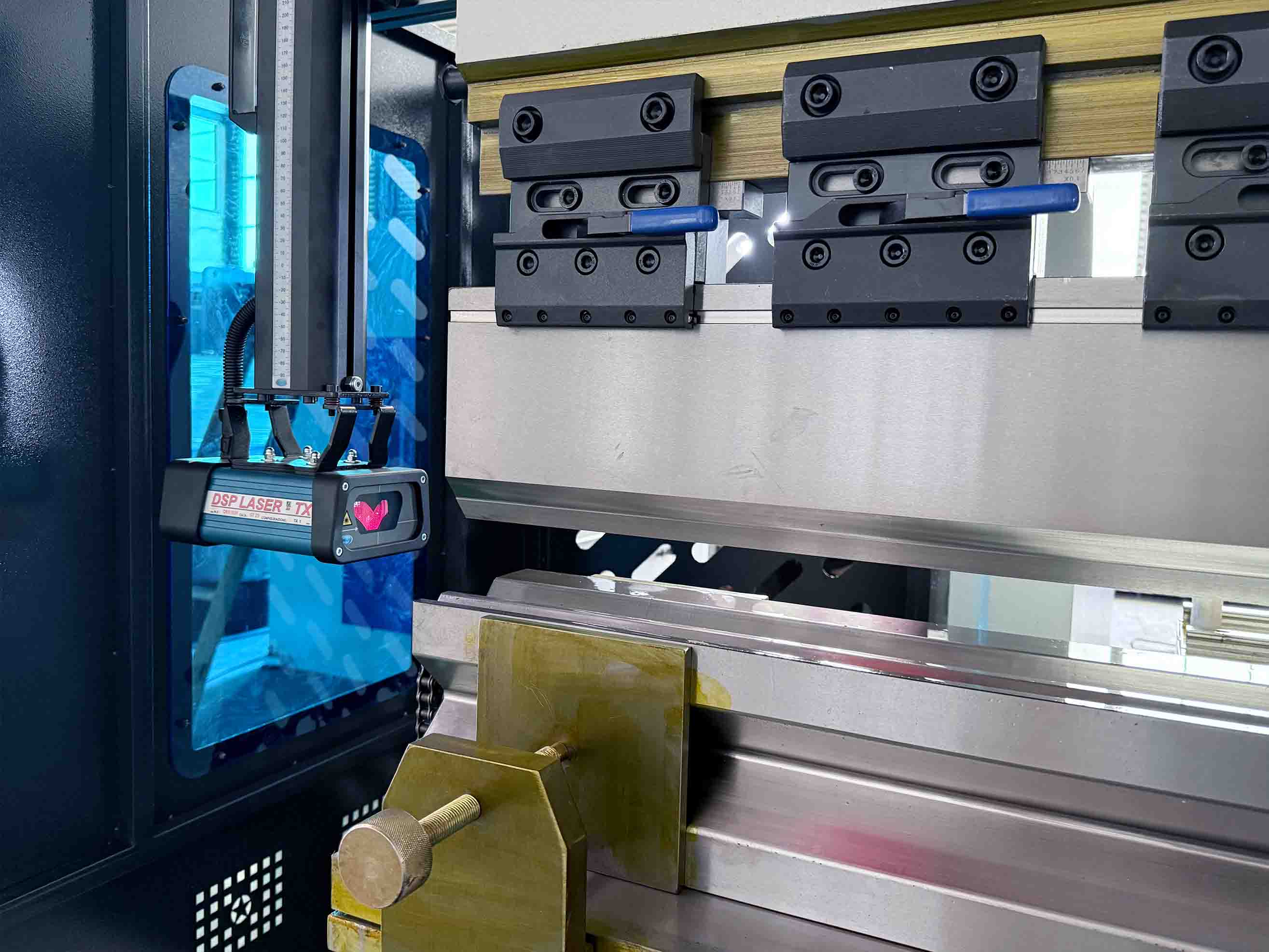
Then came laser AOPDs (active opto-electronic protective devices). Instead of fencing people out, they watch the danger zone itself. The operator can start the cycle with a foot switch while holding the workpiece right at the die — something nearly impossible under light curtains. On large parts with tall side legs, the advantage is even clearer.
Light curtain or laser AOPD? Wrong question
One keeps people out of the danger zone; the other guards the danger point itself. They are complements, not substitutes — many machines run both, because some tooling setups suit one better than the other. There is no standard answer, only the matched answer for your tooling and your parts.
The half no machine builder can solve: people
Here's the uncomfortable half of the truth: the best guarding in the world can't stop a bypassed guard. Read enough accident reports and the same missing items keep appearing — and they're the ones that cost nothing: training before anyone is allowed near the machine, written safety procedures, periodic retraining, lockout/tagout during maintenance, parking the ram at bottom dead center at the end of the shift.
You can't buy those. You build them — and you enforce them.
What to ask before you buy
So here's our honest advice, as builders: when you're evaluating a press brake, ask about tonnage, throat depth, and control — and then ask one more question: "What safety guarding options are available on this machine?" Guarding is often an option, not a given. Make sure it's on your quote, because it's part of the total cost of ownership.
Safety spending is the only kind of spending that looks wasted right up until the day it saves a life — or a finger.
ZYCO offers DSP laser safety systems as an option across our press brake range. Contact us to discuss the right guarding configuration for your parts and your shop.




 Network Supported
 English
 français
 Deutsch
 italiano
 русский
 português
 español
 한국의
한국의 Türkçe
 العربية