
In metal fabrication and sheet-metal processing, the term bending machine is widely used. However, when customers begin sourcing equipment globally or working across different industries, they often discover that the same machine is known by several different names.
So, what is a bending machine actually called?
Are there technical terms, alternative names, or specific classifications?
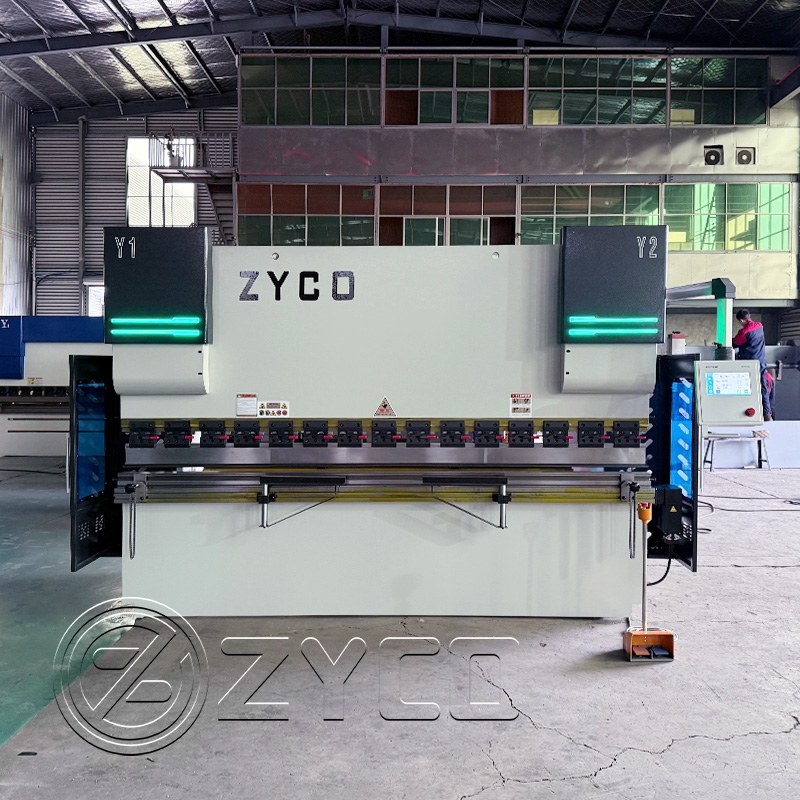
This article explains the common names, professional terminology, and main types of bending machines used in modern metalworking.
The most widely accepted and technically correct name for a bending machine is:
Press Brake
“Press brake” is the standard term used in:
· Equipment manuals
· Engineering drawings
· International trade and technical documentation
It refers to a machine that bends metal sheet by pressing it between an upper punch and a lower die.
Other commonly used names include:
· Metal Bending Machine
· Sheet Metal Bender
· CNC Bending Machine (when numerically controlled)
These names are often used for convenience, but press brake remains the professional term.
In industrial manufacturing environments, bending machines are typically classified as:
· Hydraulic Press Brake
· Servo-electric Press Brake
· CNC Press Brake
The naming usually reflects:
· The drive system (hydraulic or electric)
· The control level (manual, NC, or CNC)
· The production accuracy required
Using the correct terminology helps avoid confusion during equipment selection and technical discussions.
Bending machines are metal forming machines designed to plastically deform sheet metal without removing material.
They are used to produce:
· Straight bends
· Angles
· Box shapes
· Channels and frames
Bending machines are essential in industries such as:
· Architectural metalwork
· Door and window frames
· Elevators and decorative panels
· Cabinets and enclosures
Bending machines can be categorized in several ways.
· Hydraulic Press Brake – stable, powerful, widely used
· Servo-electric Press Brake – energy-efficient, high precision
· Manual bending machines
· NC bending machines
· CNC bending machines
· Light-duty bending machines
· Heavy-duty industrial press brakes
Each type serves different production needs depending on material thickness, accuracy requirements, and output volume.
From an engineering perspective, bending is referred to as:
Metal Bending or Sheet Metal Forming
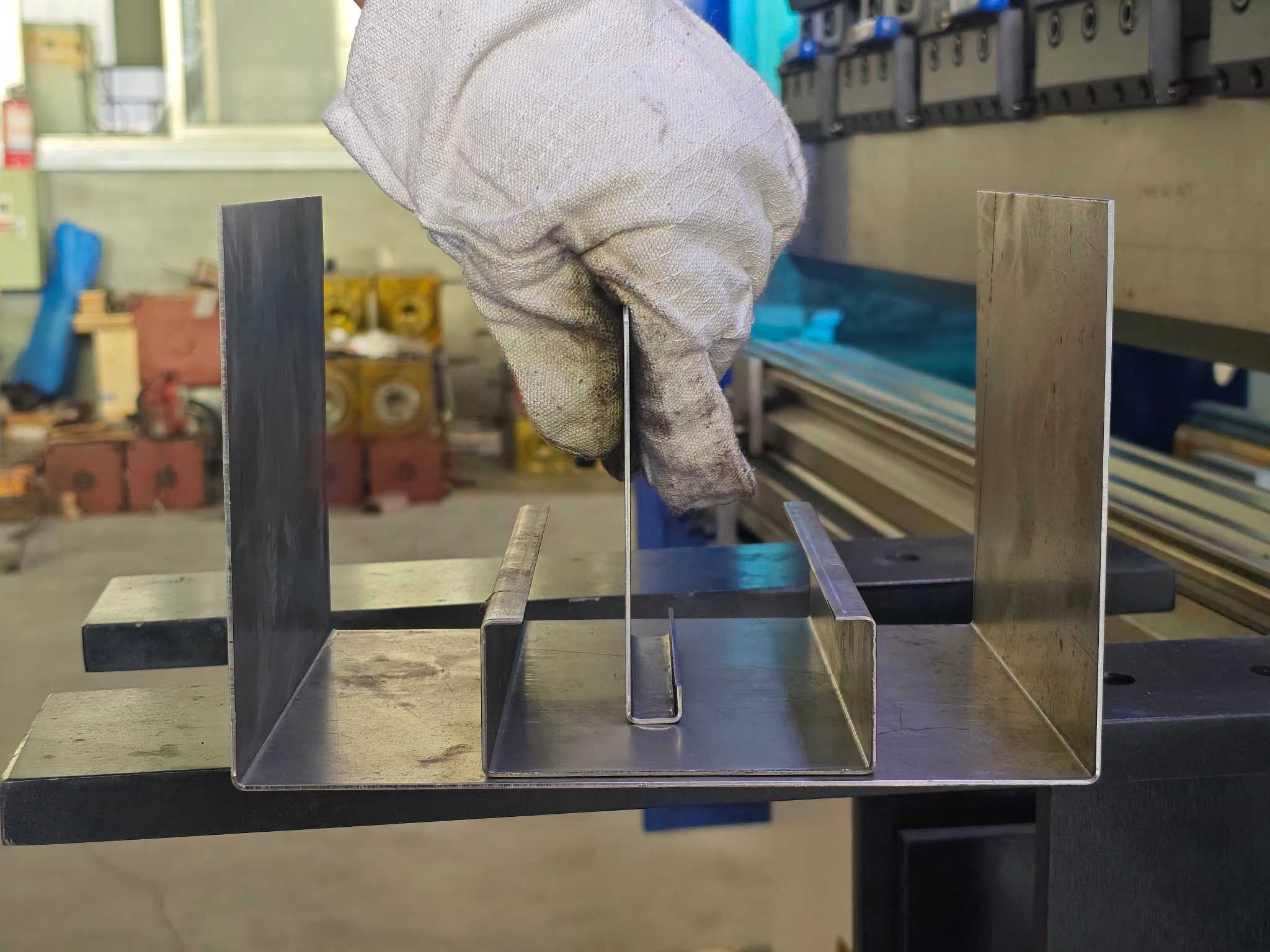
Specific bending methods include:
· Air bending: The upper die presses the sheet metal into the lower die, but not to the bottom; the bending angle is entirely controlled by the depth of the upper die's press (Y-axis position).
Advantages: Minimal pressure required, extremely high flexibility—a single die can produce multiple angles and radii simply by adjusting the machine program. This is the mainstream method for modern CNC bending machines.
Challenges: Springback is the main problem; final accuracy is highly dependent on the machine's repeatability and the CNC system's springback compensation capability.
· Bottom bending: The upper die continues to descend until the inner surface of the sheet metal is in contact with the upper die and the outer surface is supported by the shoulder of the lower die.
Advantages: A slight "ironing" effect reduces springback and significantly improves angle consistency. The required pressure is moderate—about two to four times the pressure required for air to bend.
Challenge: The mold angle accuracy must be extremely high, and each mold can only produce one fixed angle, limiting flexibility.
· Imprinting: Using extremely high pressure (approximately five to ten times that of air bending), the tip of the upper die is deeply pressed into the material, causing severe plastic deformation at the root of the bend, resulting in sheet metal thinning.
Advantages: Due to the complete elimination of material elasticity, there is almost no springback, enabling extremely high angular accuracy and very small inner radii.
Challenges: The immense pressure can severely wear down machines and molds, shortening their lifespan and leaving noticeable indentations on the part surface. Except for special precision applications, embossing is rarely used in modern U-shaped bending.
Each method affects bend radius, accuracy, and material stress differently and must be selected based on product requirements.
No. These two machines serve completely different purposes.
Shaping Machine
· Removes material through cutting
· Uses a reciprocating motion
· Mainly for surface machining
Bending Machine (Press Brake)
· Forms metal without cutting
· Uses force and dies
· Designed for sheet-metal forming
They should not be confused, even though both are used in metalworking.
In high-end sheet-metal fabrication, bending machines are often combined with V grooving machines.
By cutting precise V grooves before bending, manufacturers can achieve:
· Sharper bend lines
· Smaller inner radii
· Reduced bending force
· Better surface quality on stainless steel and decorative panels
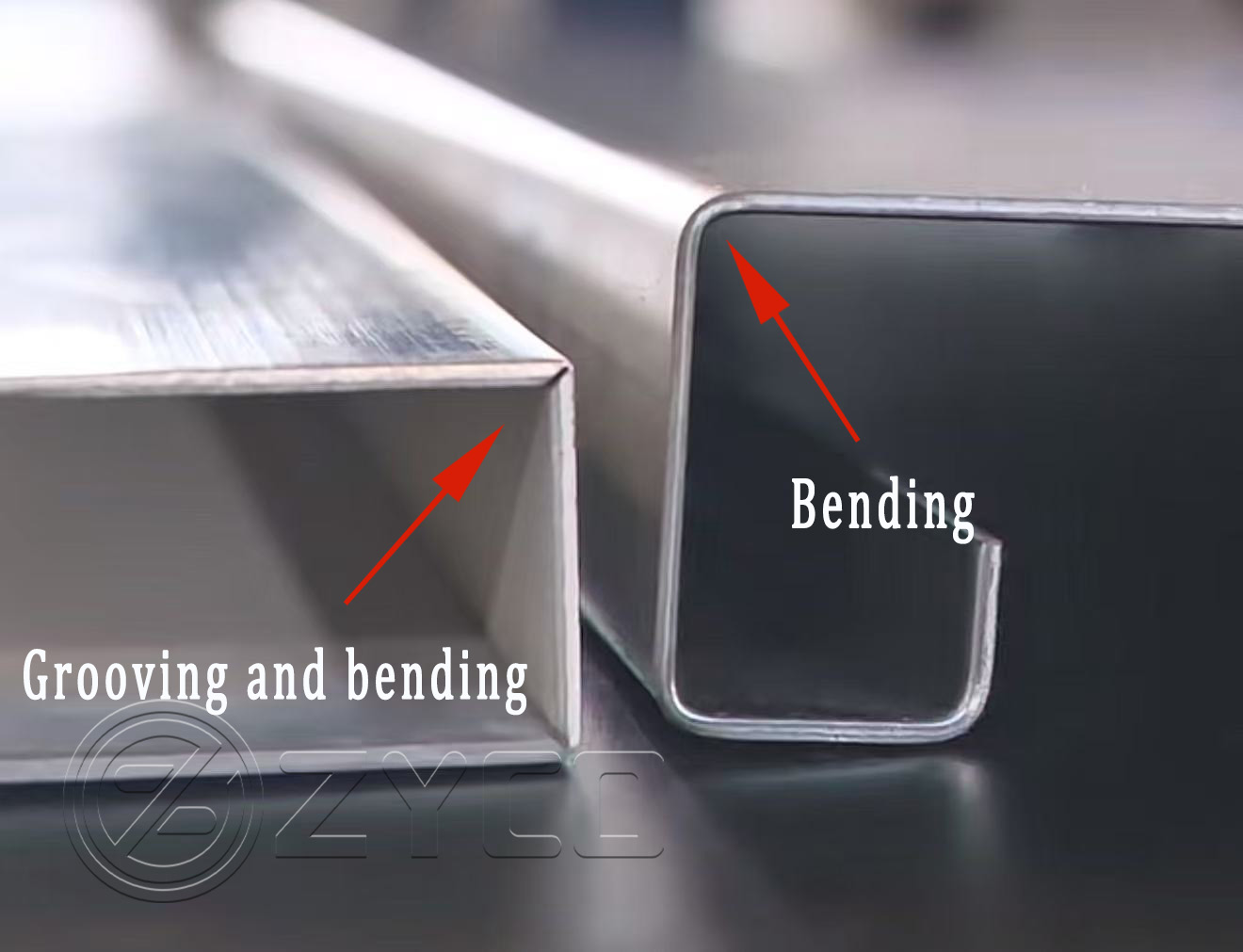
This combination is especially common in architectural metal and high-precision decorative applications.
While a bending machine may be called by many names—press brake, metal bending machine, or CNC bender—the function remains the same: precise and repeatable metal forming.
Understanding the terminology, machine types, and related processes such as V grooving helps manufacturers make better equipment decisions and improve overall production quality.
Choosing the right bending solution is not just about the machine name, but about achieving consistent, high-quality results.

Leave your email address and requirements, our professional sales team will develop the most suitable solution for you.


Copyright © 2026 Nanjing Zyco Cnc Machinery Co., Ltd. All Rights Reserved.
 Network Supported
 English
 français
 Deutsch
 italiano
 русский
 português
 español
 한국의
한국의 Türkçe
 العربية