
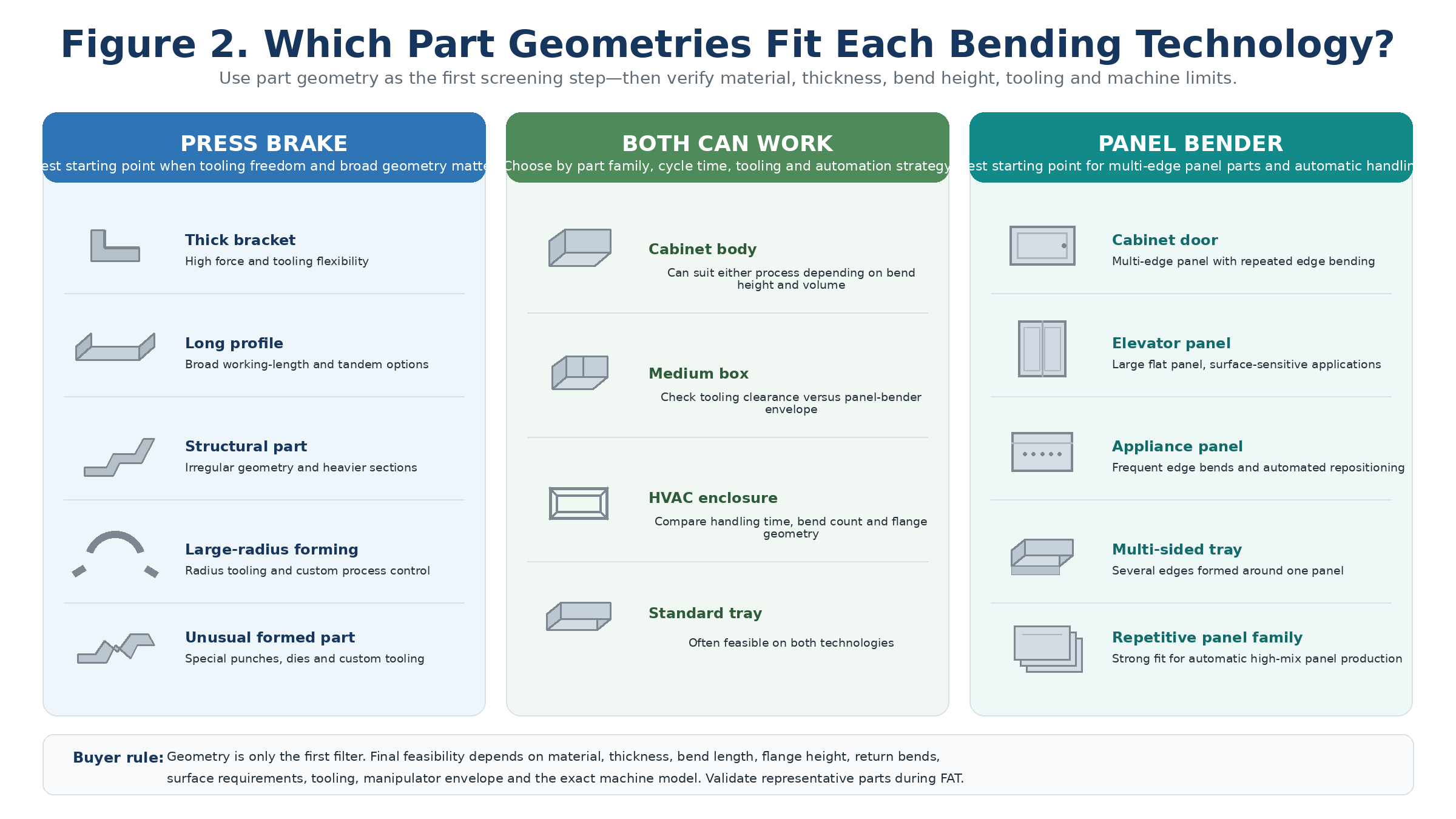
Figure 2. Typical part geometries that are better starting points for press brake, panel bender or both technologies.
No.
A panel bender can be dramatically faster on the right part.
It may eliminate:
· repeated operator repositioning;
· turning;
· lifting;
· checking;
· and manual tooling setup.
But a simple bracket may be produced faster on a press brake.
Cycle-time analysis should therefore use a real production component.
· program load;
· setup;
· material loading;
· first positioning;
· each bend;
· rotations;
· regripping;
· tool setup;
· unloading;
· inspection;
· and part changeover.
Then calculate:
Finished parts per hour
not merely:
bends per minute
This is especially important when automation is being used to justify a large capital investment.
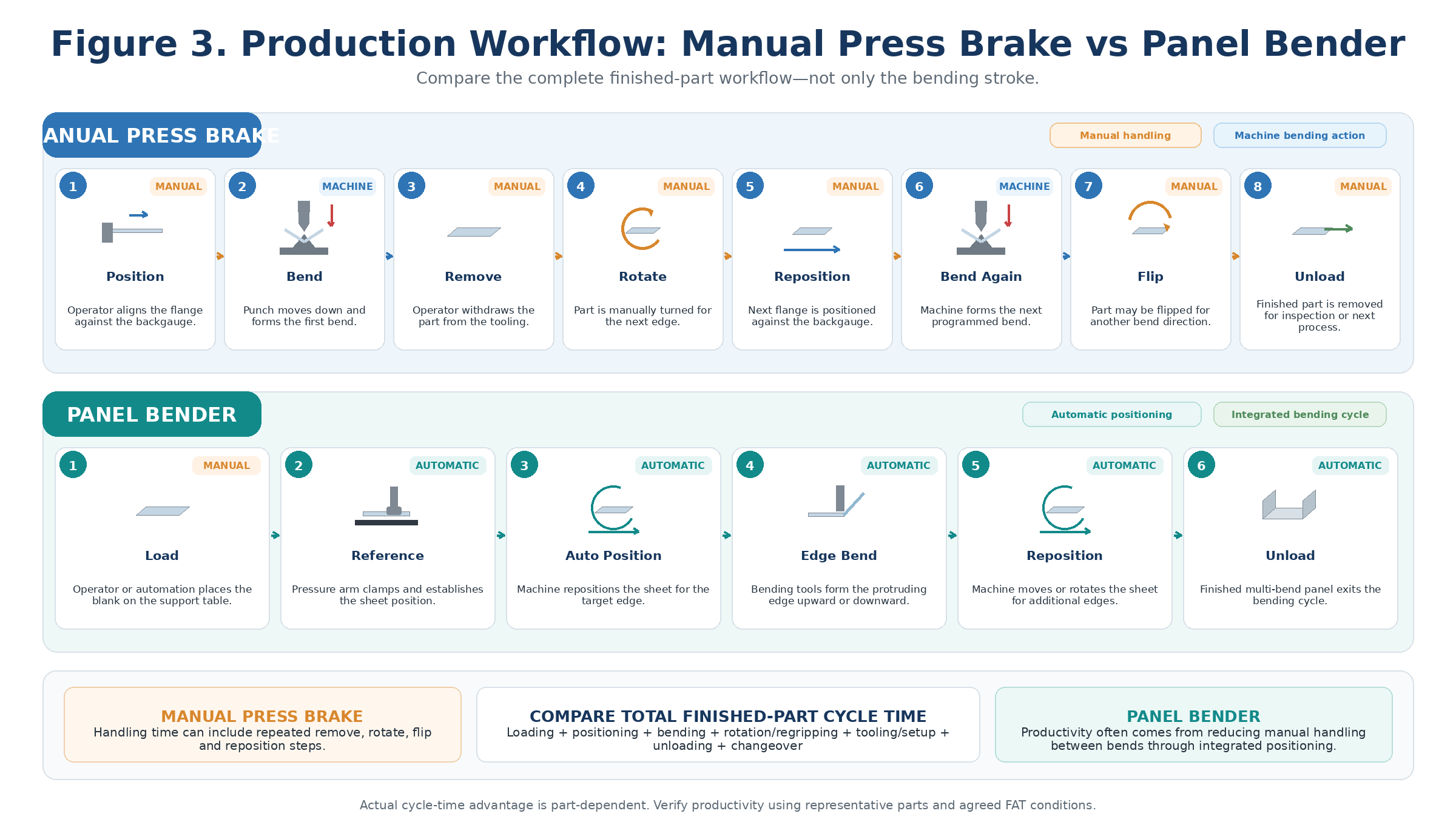
Figure 3. Workflow comparison showing why handling between bends can dominate total finished-part cycle time.
There is no technically defensible universal answer.
A high-quality press brake with:
· accurate Y1/Y2 control;
· good tooling;
· CNC crowning;
· material compensation;
· and angle measurement
may produce extremely consistent components.
A high-quality panel bender with:
· accurate blank referencing;
· adaptive algorithms;
· stable clamping;
· precise blade control;
· and automatic manipulation
may also achieve highly consistent results.
The correct test is not:
Which brochure shows the smaller number?
The correct test is:
Which system produces my representative components repeatedly within the required tolerance?
For either machine type, specify:
· exact material grade;
· material thickness tolerance;
· blank dimensions;
· bend angles;
· flange dimensions;
· measurement method;
· sample quantity;
· ambient conditions if critical;
· and acceptance tolerance.
For example:
Produce 10 consecutive representative parts using the agreed production material and program, then measure critical flange dimensions and bend angles on every part.
This provides meaningful evidence.
Ask for:
· punch profiles;
· die openings;
· segmentation;
· tooling load;
· clamping system;
· tooling storage;
· tool identification;
· and changeover time.
If production is high-mix, automatic tooling may significantly affect ROI.
Ask for:
· universal tooling range;
· blankholder setup;
· auxiliary tools;
· narrow-part capability;
· re-entrant bend tools;
· automatic setup;
· tool storage;
· and geometry limitations.
Do not accept:
"No tooling change required."
without defining the entire planned part family.
Automation changes the type of labor rather than eliminating labor completely.
More labor is concentrated in:
· machine setup;
· workpiece support;
· rotation;
· gauging;
· sequence control;
· and physical handling.
More labor moves toward:
· programming;
· loading strategy;
· automation supervision;
· production planning;
· maintenance;
· and feasibility engineering.
Adds:
· robot programming;
· gripper management;
· collision simulation;
· part-flow planning;
· and automation recovery.
Therefore the buyer should evaluate:
labor content per finished part
instead of only counting operators at the machine.
A traditional simplification is:
Press brake = small batch Panel bender = mass production
That is no longer accurate.
Modern panel benders can automatically adapt tooling and production programs to changing part geometries.
Salvagnini explicitly promotes batch-one and kit production on its P4 through automatic in-cycle tool adaptation.
Likewise, automatic tool-changing press brakes and offline-programmed robotic systems can support high-mix production effectively. LVD currently promotes vision-guided robotic systems intended to switch between parts in high-mix environments.
The more useful framework is:
Press brake often has the advantage.
Panel bender can be highly competitive if setup and manipulation are automated.
Panel bender can offer very strong productivity.
Robotic press brake may be highly effective.
The part family determines the answer.
Machine price alone is not enough.
A press brake may have:
· lower initial machine cost;
· higher manual handling;
· more tooling changes;
· more operator involvement.
A panel bender may have:
· higher automation investment;
· lower manual handling;
· reduced setup;
· fewer operator movements;
· different tooling economics.
A robotic press brake introduces:
· robot;
· grippers;
· safety cell;
· programming;
· loading/unloading;
· integration;
· and maintenance.
Therefore compare the complete production system.
A useful simplified model is:
TCO = Machine Investment + Tooling + Labor + Setup + Energy + Maintenance + Software + Spare Parts + Scrap + Service + Financing − Productivity Gains
Do not calculate ROI from an assumed industry percentage.
Build the model from your own production.
Include:
· machine;
· controller;
· automation;
· tooling;
· safety;
· shipping;
· installation;
· foundation;
· commissioning.
Calculate:
· operators per shift;
· loading labor;
· handling labor;
· tool-change labor;
· inspection labor;
· programming labor.
Include:
· standard tools;
· special tools;
· automatic tool changer;
· tool storage;
· replacements.
Estimate:
· setups per day;
· minutes per setup;
· lost production during setup.
Include:
· hydraulics if applicable;
· servo systems;
· robot service;
· manipulator maintenance;
· tooling;
· lubricants;
· software support.
Estimate costs caused by:
· first-piece correction;
· springback variation;
· scratches;
· setup error;
· wrong bend sequence;
· material variation.
Use:
accepted finished parts per staffed production hour
rather than theoretical bends per hour.
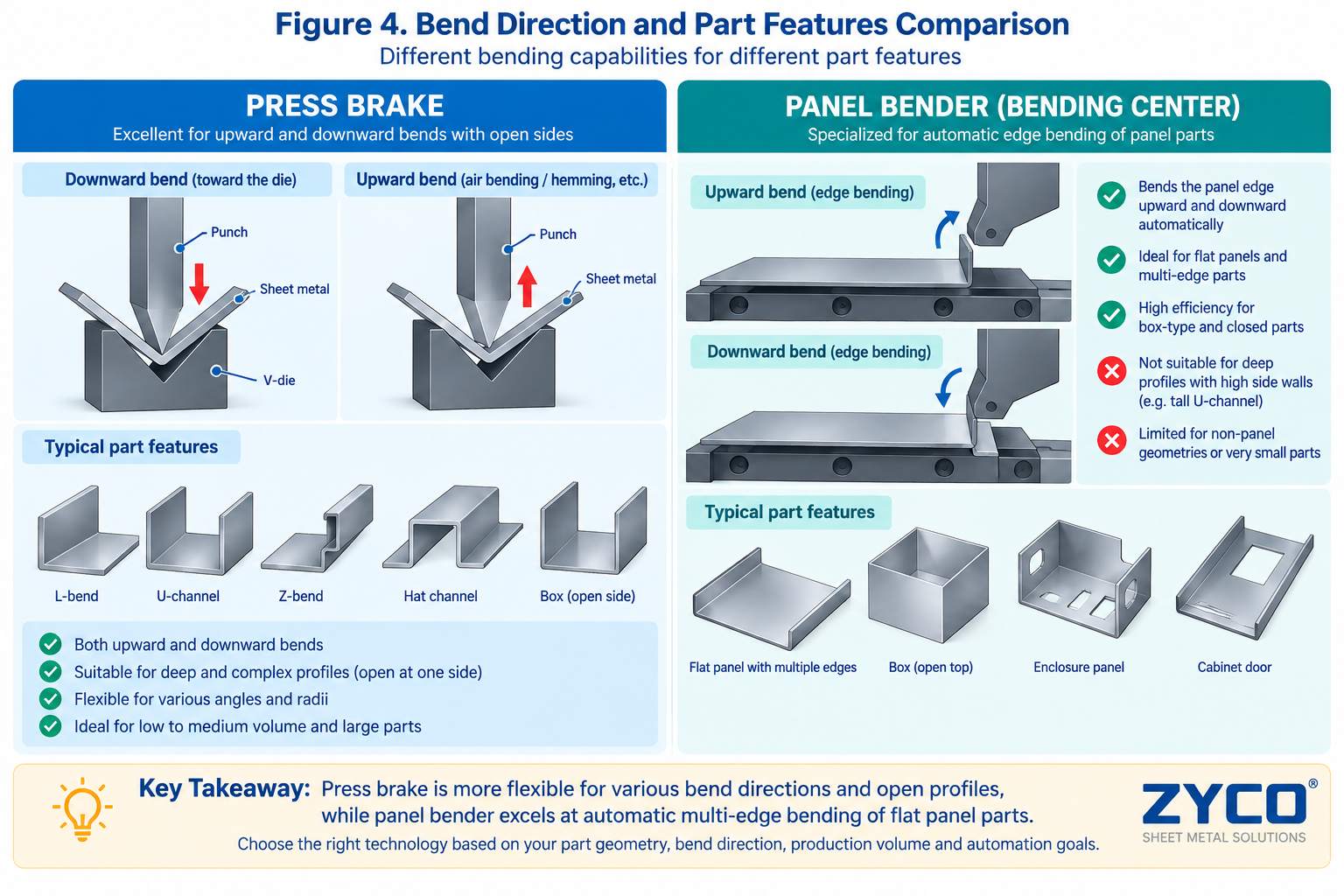
Figure 4. Total cost of ownership framework for comparing press brake, robotic press brake and panel bender investments.
A press brake should normally be the first machine evaluated when:
· material thickness varies widely;
· thick plate is common;
· future parts are unpredictable;
· custom tooling is frequently required;
· the factory is a general subcontract job shop;
· long or structural parts are common;
· one-off components are important;
· special radii or forms are required;
· part volumes do not justify integrated automation;
· or the machine must handle the broadest possible range of work.
A press brake is usually the more universal forming platform.
A panel bender should be evaluated seriously when:
· most components are sheet-metal panels;
· each component has several bends;
· workpieces require repeated rotation;
· operator handling is a major bottleneck;
· electrical cabinets or enclosures dominate production;
· appliance panels are common;
· elevator or HVAC panels are produced;
· surface appearance is important;
· frequent part changes occur;
· automatic handling is strategically important;
· or production must reduce dependence on skilled manual bending labor.
The justification should come from the part family—not from a generic productivity claim.
For many mature sheet metal factories, the optimal answer is not either/or.
A complementary structure can be:
Handles:
· suitable panel families;
· cabinets;
· doors;
· trays;
· enclosures;
· multi-edge thin-sheet work.
Handles:
· thick parts;
· long profiles;
· unusual components;
· special tooling;
· parts outside the panel-bender geometry envelope;
· unpredictable subcontract work.
This can improve utilization because each machine receives the jobs that best match its architecture.
A panel bender does not need to replace the press brake to justify its investment.
Likewise, the existence of a press brake does not mean the factory cannot benefit from panel bending.
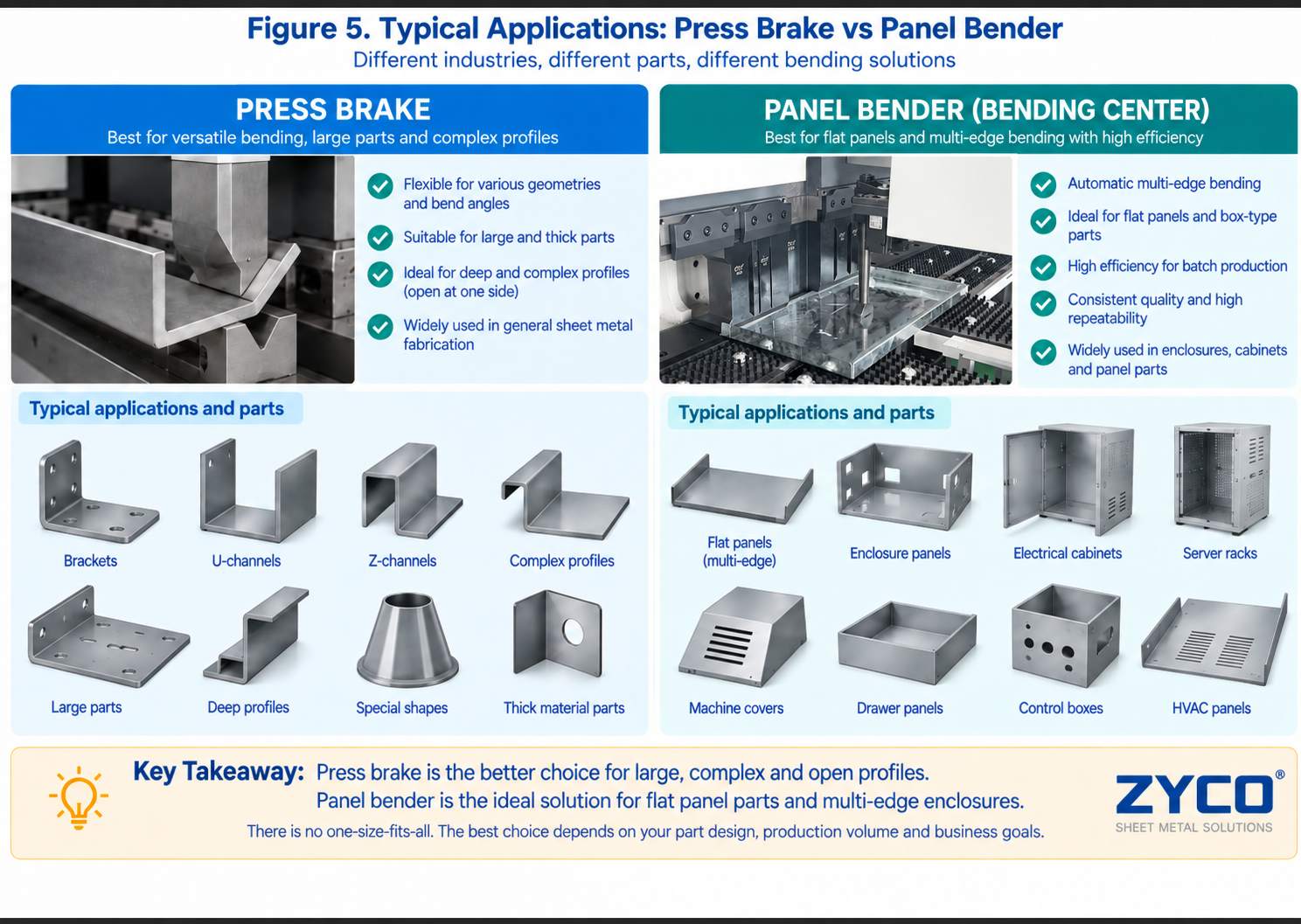
Figure 5. Buyer decision tree for selecting a press brake, panel bender, robotic press brake or a combined strategy.
|
Production Requirement |
Preferred Starting Point |
|
Thick plate |
Press Brake |
|
Very long profiles |
Press Brake |
|
Frequent special tooling |
Press Brake |
|
Highly unpredictable job-shop work |
Press Brake |
|
Structural brackets |
Press Brake |
|
Large-radius custom forming |
Press Brake |
|
Electrical cabinets |
Panel Bender / Both |
|
Electrical cabinet doors |
Panel Bender |
|
Appliance panels |
Panel Bender |
|
Elevator panels |
Panel Bender |
|
HVAC panels |
Panel Bender / Both |
|
Trays and shelves |
Panel Bender |
|
Repetitive multi-sided panels |
Panel Bender |
|
Robot-compatible complex parts |
Robotic Press Brake |
|
High-mix panel production |
Panel Bender |
|
Mixed general fabrication |
Both |
"Preferred Starting Point"does not mean automatic selection.
Every part still requires a feasibility review.
The RFQ should begin with the same workpiece data for both technologies.
· Material:
· Material grade:
· Tensile strength:
· Minimum thickness:
· Maximum thickness:
· Blank length:
· Blank width:
· Maximum diagonal:
· Maximum part weight:
· Number of bends:
· Bend direction:
· Inside radius:
· Minimum flange:
· Maximum flange:
· Maximum bend height:
· Return flanges:
· Re-entrant bends:
· Hemming:
· Surface protection required:
· Representative drawings attached:
· Annual quantity:
· Typical batch size:
· Number of part families:
· Number of changeovers/day:
· Current operators:
· Current cycle time:
· Target finished parts/hour:
· Number of shifts:
· Required unattended operation:
· Planned future volume:
Ask the supplier to confirm:
· machine tonnage;
· working length;
· distance between frames;
· stroke;
· daylight;
· throat depth;
· Y1/Y2;
· X;
· R;
· Z1/Z2;
· other required axes;
· crowning;
· controller;
· angle measurement;
· tool clamping;
· punch/die package;
· minimum V opening;
· tooling load;
· sheet follower;
· front supports;
· automatic tool changer;
· robot compatibility;
· safety equipment.
Also request a bending study using the actual parts.
Ask the supplier to confirm:
· maximum incoming blank length;
· maximum blank width;
· maximum rotatable diagonal;
· maximum bending length;
· maximum bending height;
· minimum part size;
· minimum flange;
· maximum return bend;
· re-entrant bend capability;
· positive/negative bending;
· material/thickness table;
· material-strength assumptions;
· bend-angle limits;
· minimum radius;
· manipulator design;
· blankholder configuration;
· universal tooling;
· auxiliary tools;
· narrow-part handling;
· loading automation;
· unloading automation;
· offline programming;
· surface-protection method;
· automatic tool setup;
· FAT methodology.
For every representative part, require a feasibility result.
A panel-bender FAT should not use only a simple rectangular tray.
Select multiple representative components.
Include:
Tests:
· manipulator envelope;
· rotation;
· positioning;
· loading/unloading.
Tests:
· clearance;
· blankholder;
· collision;
· unloading.
Tests:
· gripping;
· minimum geometry;
· positioning.
Include:
· positive bend;
· negative bend;
· return flange;
· several sides.
Tests:
· scratches;
· tool marks;
· protective film.
Measure:
· cycle time;
· bend angle;
· flange dimension;
· repeatability;
· setup time;
· and changeover time.
Use representative components that test:
· maximum thickness;
· maximum actual bend length;
· smallest flange;
· deepest box;
· multiple bend sequence;
· special tooling;
· crowning;
· backgauge;
· and angle compensation.
The FAT should confirm actual production capability—not merely machine motion.
A press brake normally bends sheet metal between a punch and die, while a panel bender clamps the sheet and forms its edges using controlled bending blades.
A press brake obtains much of its flexibility from interchangeable tooling. A panel bender obtains much of its productivity from automatic part handling and integrated bending automation.
It can be much faster for suitable multi-sided panel components because it reduces manual positioning, rotation and handling.
However, it is not universally faster.
Simple parts may be produced very efficiently on a press brake.
Compare total finished-part cycle time using real parts.
Not in every factory.
Panel benders are particularly effective for panel-oriented sheet-metal components, but press brakes generally offer a broader range for thick material, long parts, custom tooling and irregular geometry.
Many factories can benefit from owning both.
There is no universal thickness.
Current commercial machines vary significantly.
Examples include machines around the 3 mm-class steel range, but capacity depends on:
· material strength;
· model;
· bend angle;
· bend length;
· geometry;
· and tooling.
Always use the manufacturer’s material-specific thickness table.
Yes.
Modern panel benders with automatic tool adaptation and software-driven setup can be highly effective in high-mix, small-batch or even batch-one production.
Salvagnini specifically documents batch-one and kit production capability on the P4.
Panel benders are often well suited to electrical cabinets and enclosure panels because these parts commonly require several bends around a sheet and repeated repositioning.
However, the buyer must verify:
· bend height;
· return flanges;
· box depth;
· blank size;
· material thickness;
· and special geometry.
A press brake may still be required for cabinet frames, thick brackets and special components.
A press brake is normally the better choice.
Press brakes are available in much higher force ranges and can accommodate heavy tooling and thick-plate applications more easily.
Many panel benders significantly reduce manual tooling changes through universal or automatically configured tools.
However, special geometries may still require:
· auxiliary bending tools;
· additional blankholders;
· or automatic tooling setup.
Therefore “no tool change” should not be assumed for every part.
A panel bender often reduces manual part handling significantly because positioning and rotation are integrated.
A robotic press brake can also reduce labor substantially.
The correct comparison should calculate:
labor hours per accepted finished part
rather than simply counting operators standing at the machine.
Neither is universally better.
A robotic press brake preserves the broad tooling flexibility of a press brake while automating handling.
A panel bender integrates part manipulation directly into the bending architecture.
Robot feasibility depends on:
· part size;
· weight;
· gripper;
· regripping;
· geometry;
· and production mix.
Panel-bender feasibility depends on:
· panel envelope;
· flange height;
· rotation;
· clamping;
· and geometry.
There is no universal answer.
Both technologies can achieve high accuracy when correctly specified.
Accuracy should be validated using representative production parts under agreed FAT conditions.
For mixed production, this can be a strong strategy.
The panel bender can process suitable panel families efficiently, while the press brake handles thick, long, irregular or special-tooling work.
The correct decision depends on workload distribution and utilization.
The difference between a panel bender and a press brake is deeper than speed, automation or machine price.
Hot tags : Copper plate pure electric press brake press brake supplier comparison Panel Bending Machine Twist axis synchronous bending machine cnc panel bender machine Panel Bending Center Electric manual bending machine panel bender machine Customized bending machine

Leave your email address and requirements, our professional sales team will develop the most suitable solution for you.


Copyright © 2026 Nanjing Zyco Cnc Machinery Co., Ltd. All Rights Reserved.
 Network Supported
 English
 français
 Deutsch
 italiano
 русский
 português
 español
 한국의
한국의 Türkçe
 العربية