
A Practical Engineering Guide to Bend Allowance, Bend Deduction, K-Factor, Inside Radius, and Press Brake Production Accuracy
In sheet metal fabrication, an accurate flat pattern is the foundation of an accurate finished part.
A press brake may form the correct bend angle. The tooling may be properly selected. The operator may complete the setup correctly. But if the flat pattern length is wrong, the final part dimensions will still be wrong.
This is one of the most common problems in press brake production. A part may look correct after bending, but the flange length, overall size, hole position, or assembly dimension does not match the drawing. In many cases, the root cause is not the machine. It is the flat pattern calculation.
Bend allowance, bend deduction, and K-factor are three of the most important concepts used to calculate sheet metal flat patterns. They are closely related, but they are not the same.
· Bend allowance describes the developed length of the material through the bend area.
· Bend deduction describes how much length must be deducted from the outside dimensions to obtain the flat pattern length.
· K-factor describes the position of the neutral axis inside the material thickness and directly affects bend allowance.
Accurate flat patterns are not created by CAD software alone. They depend on material thickness, inside radius, tooling selection, bending method, material behavior, press brake setup, and real production validation.
In many fabrication shops, bending problems are first noticed at the inspection table or during assembly.
The bend angle may be acceptable, but the part still fails because the dimensions are wrong. A flange may be too long. A hole may be too close to a bend. Two parts may not align during welding. An enclosure may not close properly. A bracket may fail to match the mating part.
These problems often come from incorrect flat pattern development.
· Incorrect flange dimensions
· Poor assembly fit
· Welding adjustment
· Hole misalignment after bending
· Increased scrap
· Additional machine setup time
· Repeated trial bending
· Higher labor cost
· Delayed delivery
The real cost is not only the sheet metal material. The larger cost comes from rework, inspection, repeated programming adjustments, operator time, and downstream production delays.
Modern CAD software can automatically generate sheet metal flat patterns. This is helpful, but it does not guarantee production accuracy.
CAD systems usually require input values such as material thickness, bend angle, inside radius, K-factor, bend allowance, bend deduction, and bend table data.
If these values are not based on real production conditions, the flat pattern may be wrong even when the CAD model looks perfect.
A common mistake is assuming that the default K-factor in CAD software applies to all materials, all thicknesses, all tooling, and all bending methods.
· Material grade and thickness tolerance
· Yield strength and springback behavior
· Inside radius and V-die opening
· Punch radius and tooling condition
· Air bending, bottoming, or coining
· Operator setup and machine repeatability
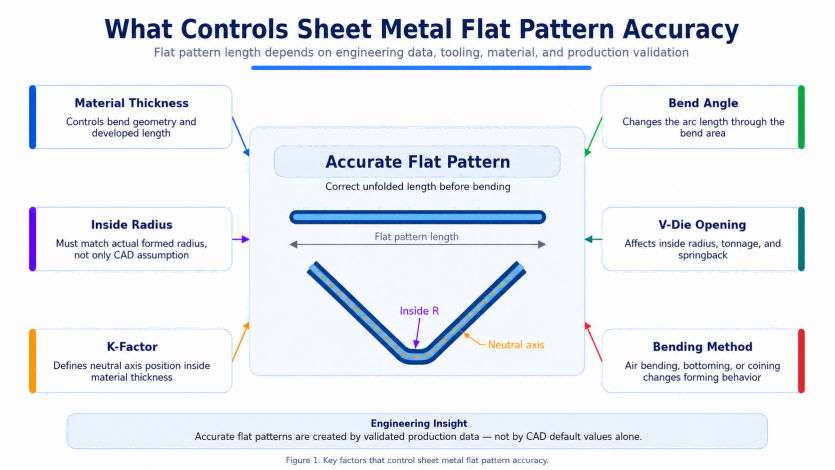
Figure 1. Key factors that control sheet metal flat pattern accuracy.
Bend allowance is the length of material required to form the bend area.
When sheet metal is bent, the material does not simply fold at a sharp line. The bend has a radius. The material along the inside of the bend compresses, while the material along the outside of the bend stretches.
Somewhere between the inside and outside surfaces is a layer that does not significantly stretch or compress. This layer is called the neutral axis.
Bend allowance is calculated along this neutral axis through the bend. In simple terms, bend allowance represents the developed arc length of the bend area.
|
Common bend allowance formula |
If bend allowance is too large, the flat pattern becomes too long. If bend allowance is too small, the flat pattern becomes too short. In multi-bend parts, small errors can accumulate and become serious.
Bend deduction is another method used to calculate the flat pattern length.
Instead of adding the developed bend length to the straight sections, bend deduction starts from the outside dimensions of the formed part and deducts the material effect of the bend.
In practical sheet metal work, many drawings define parts using outside dimensions. Bend deduction helps convert those outside dimensions into the correct flat pattern.
In simple terms, bend deduction is the amount removed from the total outside dimensions to obtain the flat pattern length.
|
Simple bend deduction relationship |
Bend deduction is commonly used because it is practical for shop-floor manufacturing. Once validated, bend deduction charts can help operators and engineers produce repeatable parts faster.
K-factor describes the location of the neutral axis inside the material thickness.
It is expressed as a ratio: K-Factor = Distance from inside surface to neutral axis / Material thickness.
The K-factor directly affects bend allowance. If the K-factor changes, the calculated bend allowance changes, and the flat pattern length changes.
K-factor is not a universal constant. It can be affected by material type, thickness, inside radius, bend angle, bending method, tooling geometry, V-die opening, punch radius, hardness, and springback behavior.
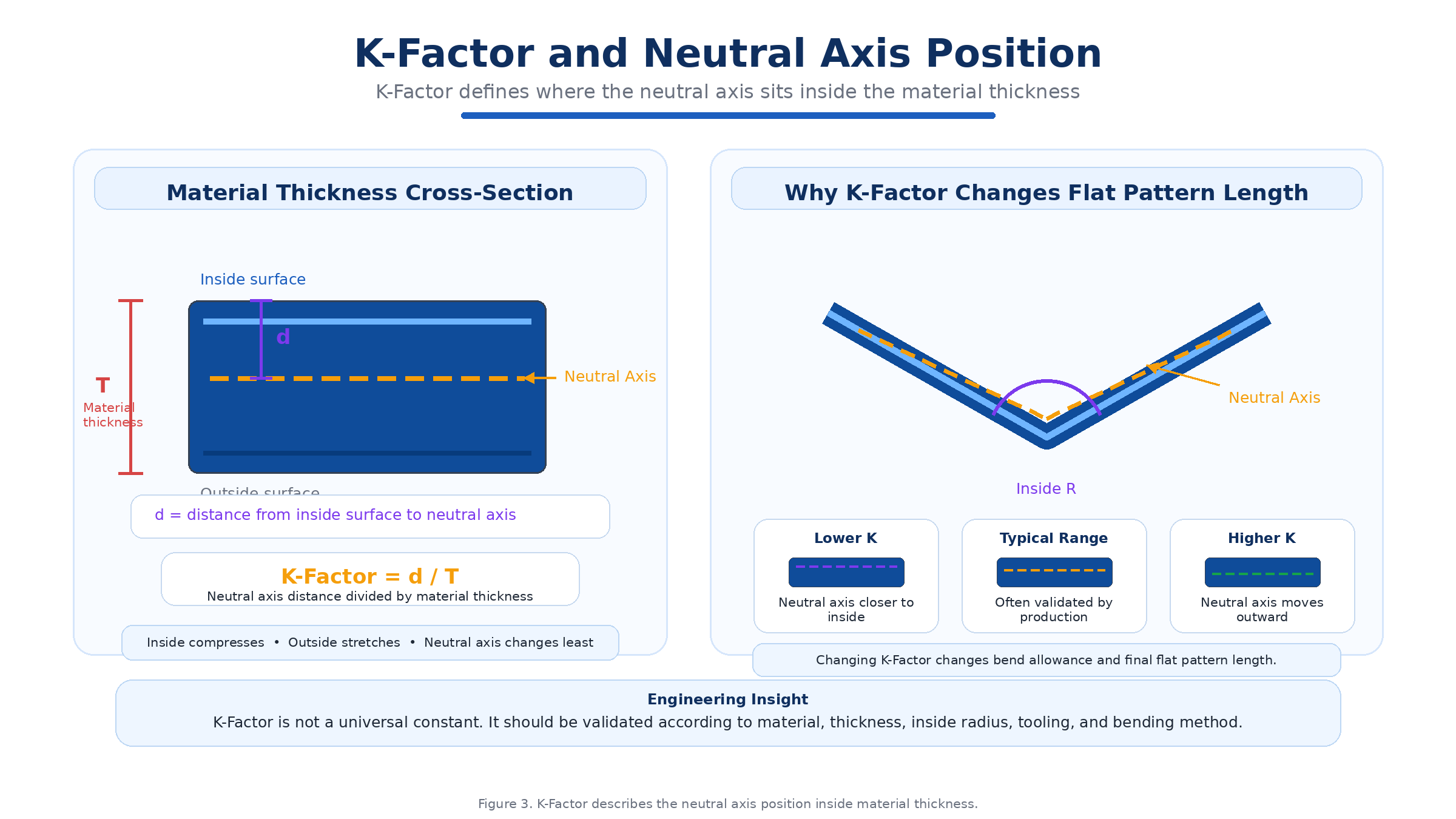
Figure 2. K-Factor describes the neutral axis position inside material thickness.
Bend allowance, bend deduction, and K-factor are connected, but they serve different purposes.
· Bend allowance answers: How much material length is used through the bend?
· Bend deduction answers: How much should be deducted from the outside dimensions to get the flat pattern?
· K-factor answers: Where is the neutral axis located inside the material thickness?
|
Concept |
Main Purpose |
Production Meaning |
|
Bend Allowance |
Calculates developed bend length |
Used to build flat pattern length from straight sections |
|
Bend Deduction |
Converts outside formed dimensions into flat length |
Used to subtract bend effect from outside dimensions |
|
K-Factor |
Defines neutral axis position |
Influences bend allowance calculation |
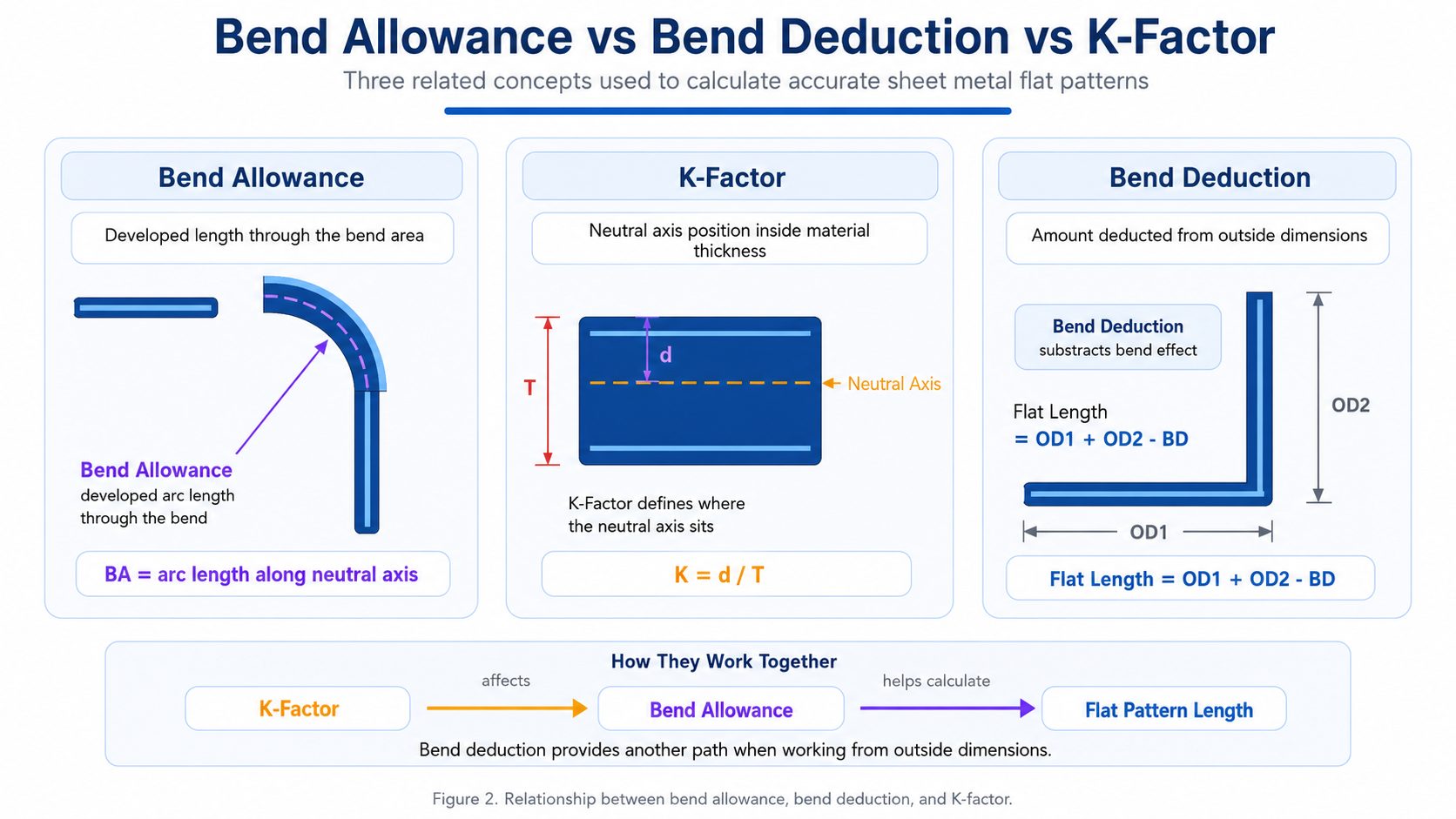
Figure 3. Relationship between bend allowance, bend deduction, and K-factor.
Inside radius is one of the most important variables in flat pattern calculation.
If the actual inside radius is different from the CAD assumption, the flat pattern length can become inaccurate.
For example, if CAD assumes a small inside radius but the actual air bending process produces a larger inside radius, the calculated flat pattern may not match the real formed part.
This is common in air bending because the inside radius is strongly influenced by the V-die opening. A larger V opening generally produces a larger inside radius. A smaller V opening generally produces a smaller inside radius but requires more tonnage and may increase surface marking.
V-die opening affects the bending process in several ways. It influences inside radius, required tonnage, springback behavior, surface marking, angle stability, bend allowance, and bend deduction.
This is why a flat pattern calculated for one V-die opening may not be accurate when the operator uses a different die opening on the machine.
The problem is not simply the operator. The problem is the lack of connection between CAD flat pattern assumptions and actual tooling selection.
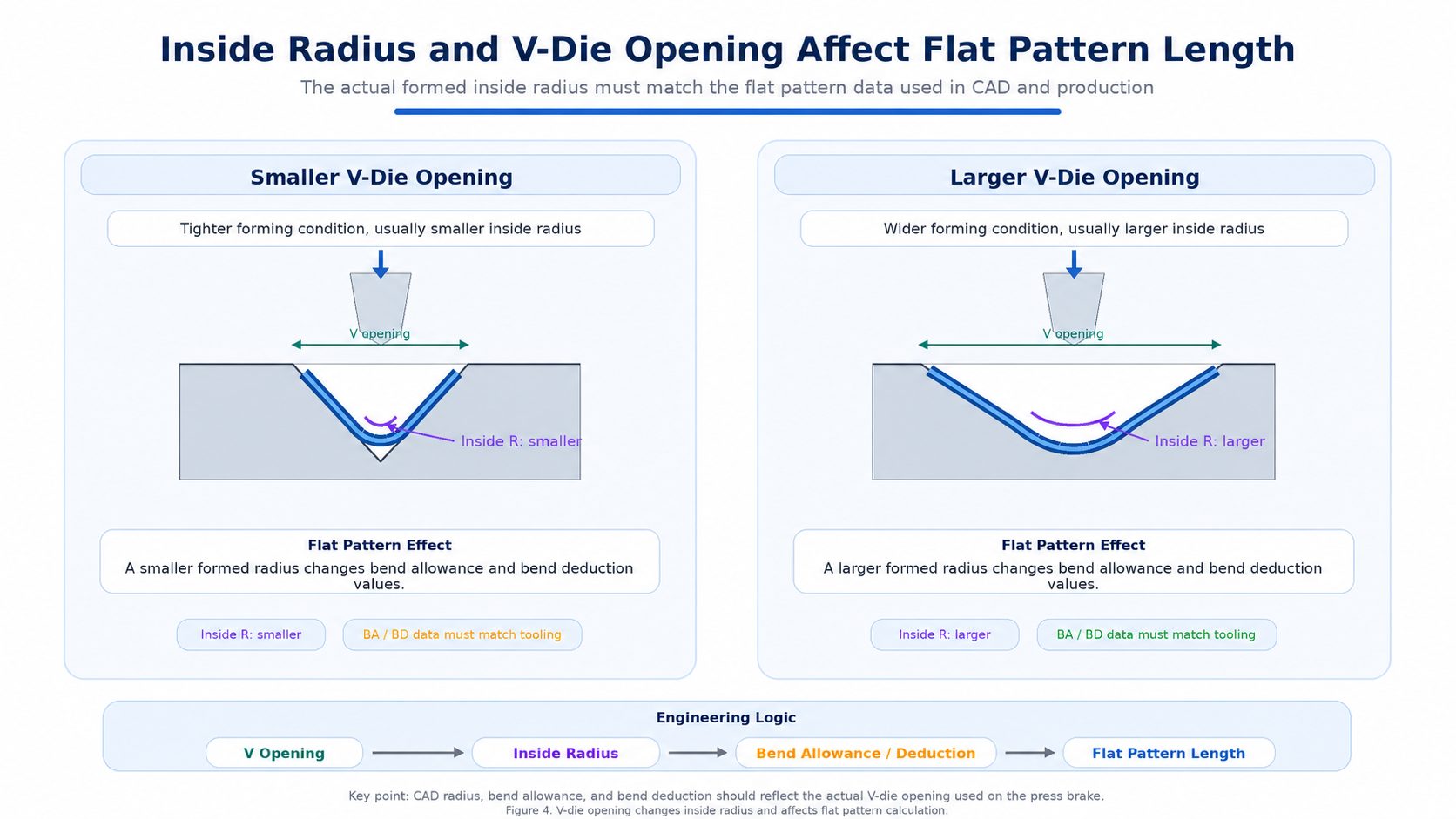
Figure 4. V-die opening changes inside radius and affects flat pattern calculation.
Air bending, bottoming, and coining can produce different inside radii and different material deformation behavior.
In air bending, the inside radius is often controlled more by the V-die opening than by the punch radius. This makes air bending flexible, but it also means the flat pattern calculation must reflect the actual die opening used in production.
In bottoming, the material is formed closer to the tooling angle, and the tooling geometry has stronger influence on the final bend.
In coining, the material is forced more deeply into the tool geometry under high pressure, which can change material flow and reduce springback.
A practical rule is: do not use one flat pattern rule for every bending method.
Different materials behave differently during bending.
Mild steel, stainless steel, galvanized steel, aluminum, brass, and high-strength steel do not stretch, compress, and spring back in exactly the same way.
Material differences can affect springback, inside radius, required tonnage, neutral axis position, bend allowance, bend deduction, and final part dimensions.
This is why professional manufacturers often build internal material databases. Over time, this data becomes more valuable than generic textbook values because it reflects real production conditions.
CAD software is a tool, not a guarantee. Default K-factor values may not match your actual material, tooling, or bending method.
Different materials behave differently. Mild steel, stainless steel, and aluminum should not always use the same flat pattern assumptions.
If the actual formed inside radius is different from the CAD radius, the flat pattern may be wrong.
Changing the V opening can change the inside radius and therefore affect bend allowance and bend deduction.
A bend table developed for air bending may not apply to bottoming or coining.
An operator may adjust the bend angle until it is correct, but if the flat pattern length is wrong, the final dimensions will still fail.
Many factories solve the same problem repeatedly because they do not record validated setup data.
Even the same material grade may vary between suppliers or batches. Production validation remains important.
A manufacturer producing stainless steel electrical enclosures experienced repeated dimensional errors after bending.
The bend angles were close to target, but the final enclosure dimensions did not match the assembly requirements. Operators adjusted the bend angle several times, but the problem continued.
After investigation, the engineering team found that the CAD flat pattern used a default K-factor originally suitable for mild steel. The actual stainless steel material produced different springback and radius behavior.
The corrective action was to create a stainless steel-specific bending table based on actual production tests. The team measured the formed parts, updated the bend deduction values, and documented the recommended tooling conditions.
The lesson is clear: material-specific flat pattern data is essential for precision sheet metal fabrication.
A shop produced a batch of brackets using air bending. The CAD model assumed a small inside radius, but the actual production used a larger V opening.
The finished parts had correct angles, but the flange dimensions were slightly different from the drawing. The issue became serious during assembly because the bracket holes no longer aligned correctly.
The root cause was the mismatch between CAD radius assumptions and actual tooling.
The solution was to update the flat pattern calculation using the actual formed inside radius from the selected V-die opening. The engineering team also added a note to the drawing specifying the recommended die opening for future production.
The lesson: flat pattern accuracy depends on actual tooling, not only CAD geometry.
A fabrication company produced a multi-bend sheet metal part. The operator successfully adjusted the bend angles to match the drawing. However, the final overall length was still incorrect.
The team initially suspected backgauge error, but inspection showed that the backgauge was accurate.
The real issue was accumulated flat pattern error across multiple bends. Each bend had a small bend deduction mismatch. One bend alone was acceptable, but the accumulated error across the part caused the final dimension to fail.
The corrective action was to validate bend deduction values through a test coupon and update the bend table.
The lesson: multi-bend parts require validated bend allowance and bend deduction data because small errors can accumulate.
Do not rely only on nominal material names. Confirm material grade, thickness, and supplier where possible.
The inside radius used in CAD should match the radius produced by the selected tooling and bending method.
If operators use different V openings for the same part, flat pattern results may change.
Use CAD values as a starting point, then adjust based on measured production results.
For common materials and thicknesses, validated bend deduction tables can reduce repeated trial and error.
Before large production runs, test coupons can help confirm bend allowance, bend deduction, inside radius, and springback behavior.
Once a part is produced successfully, record the material, tooling, V opening, radius, K-factor, bend deduction, and inspection result.
CAD engineers and press brake operators must use the same assumptions. The drawing, program, tooling, and machine setup should be connected.
· Material grade confirmed
· Material thickness confirmed
· Bend angle confirmed
· Inside radius verified
· V-die opening selected
· Punch radius checked
· Bending method confirmed
· K-factor reviewed
· Bend allowance calculated
· Bend deduction validated
· Springback behavior considered
· First-piece inspection planned
· Production data recorded after successful bending
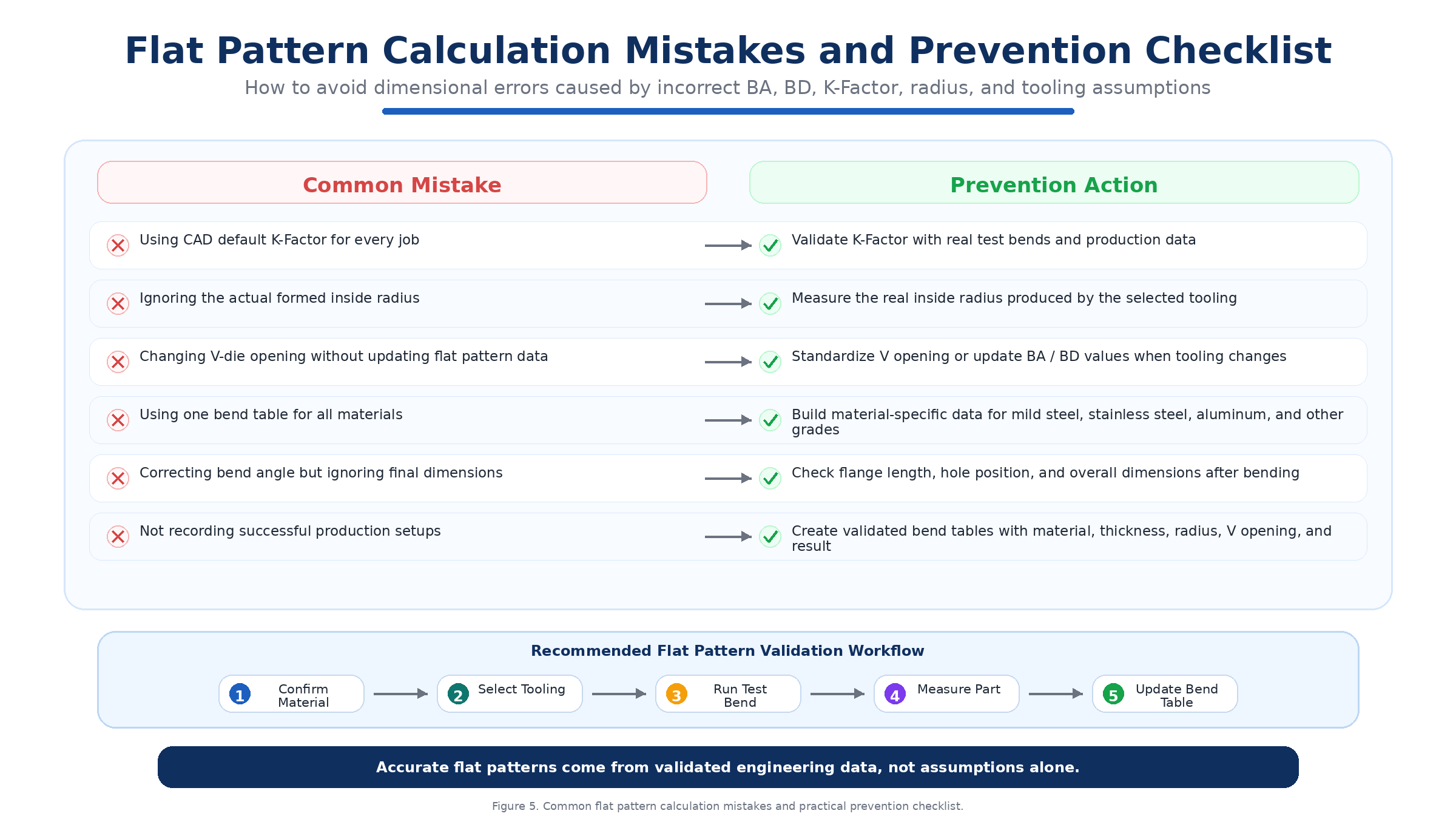
Figure 5. Common flat pattern calculation mistakes and practical prevention checklist.
To help manufacturers improve flat pattern calculation and press brake bending accuracy, the ZYCO Engineering Hub provides practical tools and engineering guides.
Bend allowance is the developed length of material through the bend area. Bend deduction is the amount deducted from outside dimensions to calculate the flat pattern length.
K-factor is the ratio that describes the neutral axis position inside the material thickness. It affects bend allowance and flat pattern length.
The bend angle may be correct, but the flat pattern can still be wrong if bend allowance, bend deduction, inside radius, or K-factor assumptions are incorrect.
Yes. V-die opening affects inside radius, springback, tonnage, and flat pattern length, especially in air bending.
No. Different materials and bending methods may require different K-factor values. Production validation is recommended.
CAD defaults may not match actual material properties, tooling, bending method, or press brake setup conditions.
Measure actual formed parts, validate inside radius, standardize tooling, build bend deduction tables, use test coupons, and record successful production data.
Neither is universally better. They are different calculation methods. Bend allowance is often used to calculate developed length, while bend deduction is commonly used when working from outside dimensions.
Accurate sheet metal flat patterns are not created by CAD software alone. They are created by connecting engineering calculations with real press brake production conditions.
Bend allowance, bend deduction, and K-factor are essential concepts for calculating flat pattern length, but they must be understood correctly. Bend allowance describes the developed bend length. Bend deduction converts outside dimensions into flat length. K-factor defines the neutral axis position and influences bend allowance.
In real production, these values are affected by material thickness, inside radius, V-die opening, bending method, tooling geometry, springback, and machine setup.
Manufacturers that rely only on default CAD values often face repeated dimensional errors. Manufacturers that validate bend data, standardize tooling, record production results, and build internal bending tables achieve better accuracy and more consistent fabrication results.
The most reliable flat pattern calculation system is not based on theory alone. It is based on engineering principles, production validation, and continuous data improvement.

Leave your email address and requirements, our professional sales team will develop the most suitable solution for you.


Copyright © 2026 Nanjing Zyco Cnc Machinery Co., Ltd. All Rights Reserved.
 Network Supported
 English
 français
 Deutsch
 italiano
 русский
 português
 español
 한국의
한국의 Türkçe
 العربية