
ZYCO ENGINEERING WHITE PAPER
How to Calculate Press Brake Tonnage Correctly
Engineering Methods, Machine Selection, Tooling Compatibility and Production Validation
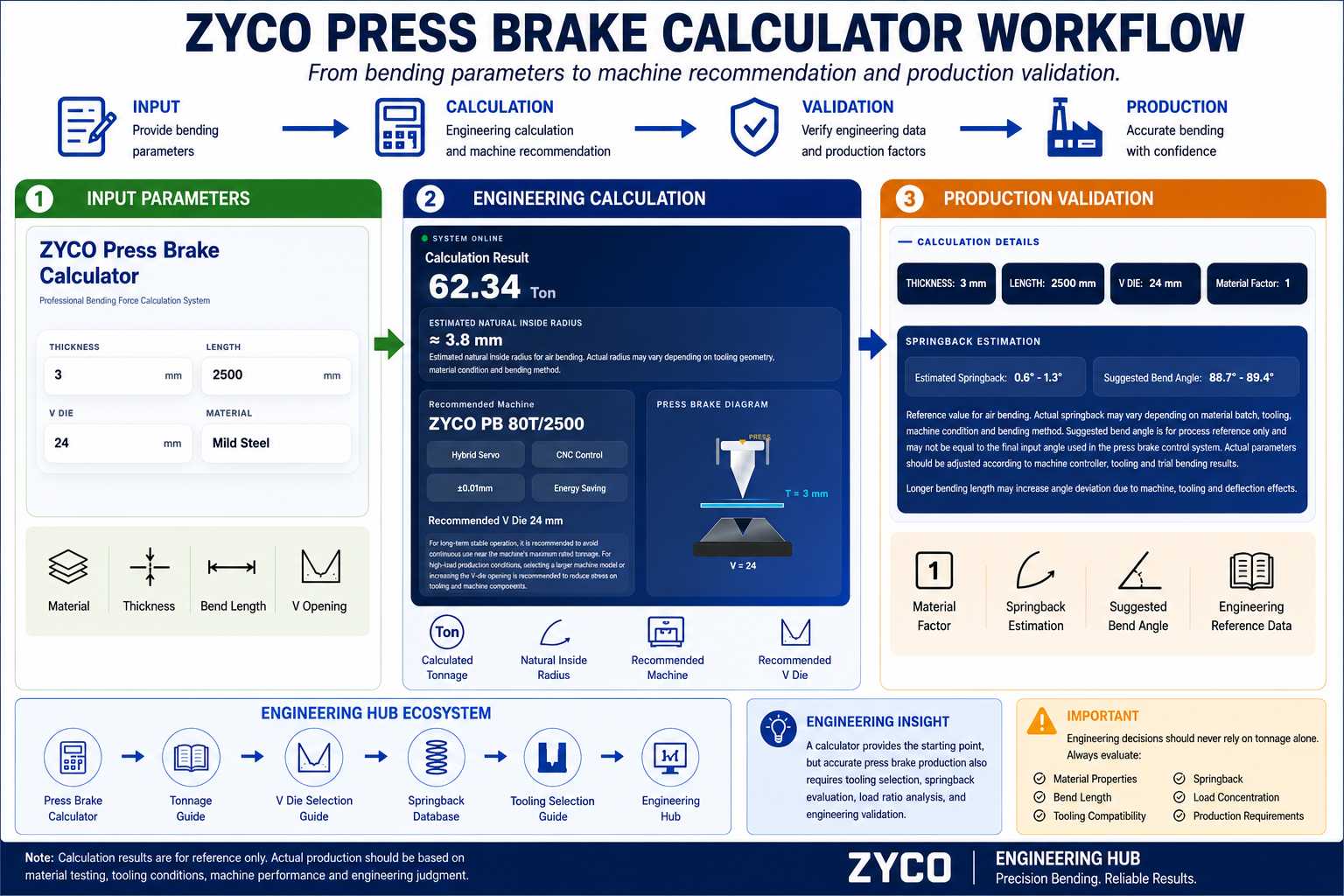
ZYCO Press Brake Calculator workflow from bending parameters to production validation.
Version 2.1 Professional Publication Edition | ZYCO Engineering Team
Press brake tonnage calculation is not only a formula problem. It is a practical engineering decision that affects bend accuracy, tooling life, machine reliability, production cost and long-term equipment health. This professional publication edition explains how material type, thickness, bend length, V-opening selection, bending method, load ratio, tooling compatibility and load concentration work together in real production.
The purpose of this guide is to help sheet metal manufacturers move beyond simple tonnage charts and build a safer, more consistent bending process. The examples and figures are aligned with ZYCO Engineering Hub logic and the ZYCO Press Brake Calculator workflow.
|
Key Takeaways 1. Tonnage is influenced by material strength, thickness, bend length and V-opening. |
Introduction
What Is Press Brake Tonnage?
Why Accurate Tonnage Calculation Matters
The Engineering Formula Behind Press Brake Tonnage
Understanding Material Factors
How Material Thickness Influences Tonnage
How Bend Length Influences Tonnage
How V-Opening Influences Tonnage
Air Bending vs Bottoming vs Coining
Springback Compensation and Process Validation
Real Production Examples
Machine Capacity Selection
Tooling Compatibility Analysis
Load Concentration Analysis
Why Production Frequency Matters
Theoretical vs Practical Tonnage
Digital Calculators and Modern Fabrication
Common Mistakes and Best Practices
Frequently Asked Questions
Engineering Hub Resources
Conclusion
Press brake tonnage is one of the most important engineering variables in sheet metal fabrication. Every successful bending operation depends on applying sufficient force to plastically deform the material while maintaining dimensional accuracy, tooling life, machine reliability, and production efficiency.
Despite its importance, tonnage remains one of the most misunderstood topics in the fabrication industry. Many operators still rely on old tonnage charts, shop experience, or rough estimates when selecting machines and tooling. While these methods may work for familiar jobs, they become increasingly unreliable when working with new materials, thicker plates, longer bend lengths, or demanding production requirements.
Incorrect tonnage calculations can create a wide range of problems. Insufficient force may lead to incomplete bends, excessive springback, inconsistent angles, and dimensional inaccuracies. Excessive force may accelerate punch and die wear, increase hydraulic system stress, and reduce machine lifespan.
For manufacturers producing electrical cabinets, industrial enclosures, agricultural machinery, elevator panels, stainless steel products, and structural components, understanding how to calculate press brake tonnage correctly is essential for maintaining quality and controlling production costs.
This white paper explains the engineering principles behind press brake tonnage calculations and combines theoretical knowledge with practical fabrication experience. The goal is not only to calculate force accurately but also to understand the real-world factors that influence successful bending operations.
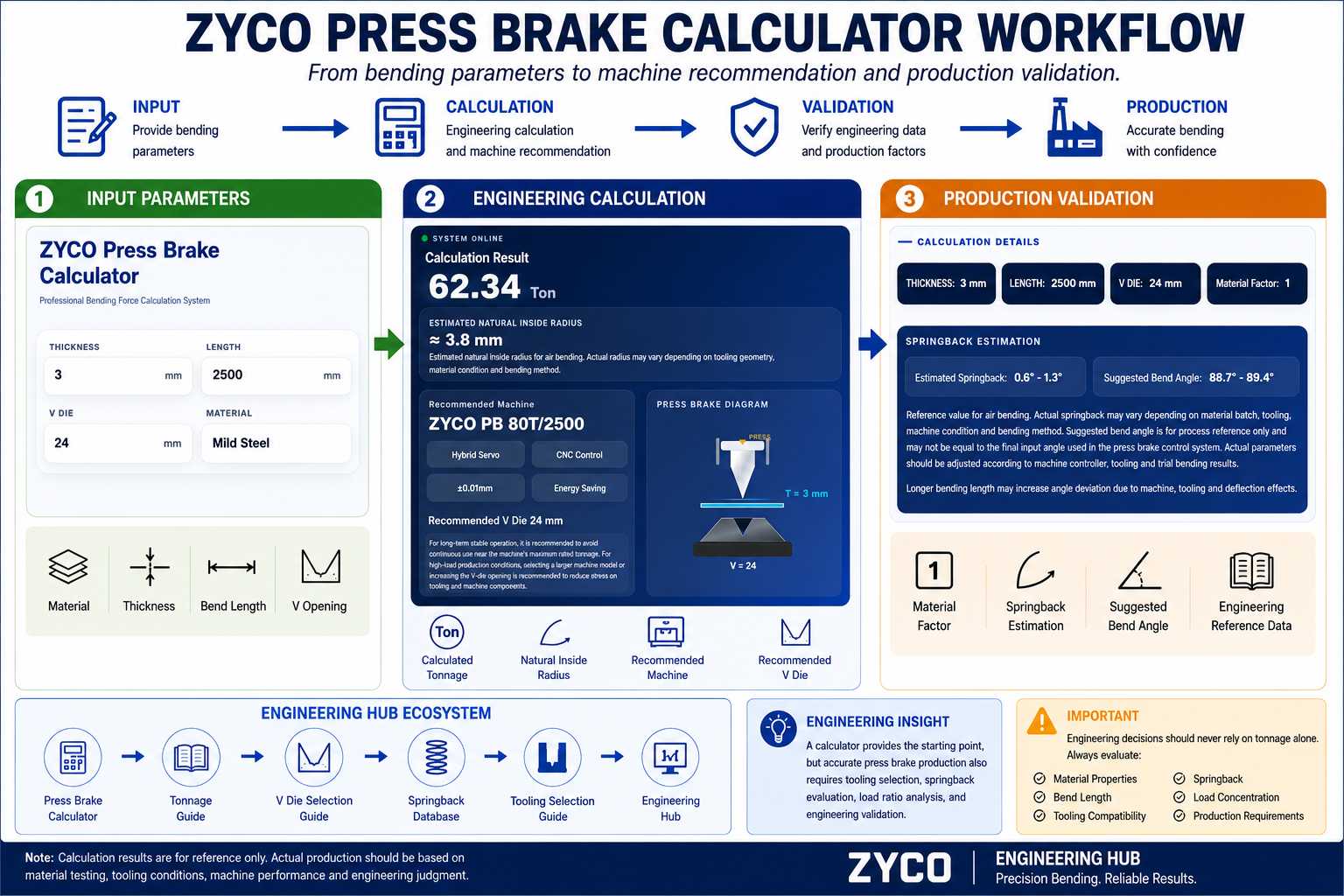
Figure 1. The ZYCO Engineering Workflow integrates tonnage calculation, machine recommendation, springback estimation and production validation into one decision-making process.
Press brake tonnage refers to the amount of force required to permanently deform a sheet metal workpiece into a specified bend angle.
The force generated by the press brake ram is transferred through the punch and die into the material. Once the force exceeds the material's yield strength, the material plastically deforms and retains the desired shape.
The required force depends on multiple variables:
Material type
Material thickness
Bend length
V-opening size
Material strength
Bending method
Desired bend angle
Because these variables can change dramatically from one application to another, tonnage requirements may vary significantly even when two parts appear visually similar.
For example, a 3 mm mild steel electrical enclosure and a 3 mm stainless steel enclosure may have identical dimensions. However, the stainless steel component may require substantially more force because of its higher yield strength and greater springback tendency.
This is why professional fabrication shops calculate tonnage rather than relying solely on assumptions.
Many operators view tonnage calculation as a machine selection exercise. In reality, it influences almost every aspect of fabrication performance.
Accurate calculations help improve:
When tonnage is underestimated, several problems may occur:
Incomplete bends
Excessive springback
Poor angle accuracy
Additional correction operations
Reduced productivity
When tonnage is overestimated:
Tooling experiences unnecessary stress
Hydraulic systems work harder than required
Maintenance costs increase
Equipment life may decrease
For modern fabrication environments, accurate force estimation is a core engineering responsibility.
The calculation method used throughout the ZYCO Engineering Hub is:
Tonnage = (1.33 × T² × L × Material Factor) ÷ (V × 20)
Where:
The coefficient 1.33 is used to reflect practical air-bending conditions and aligns closely with real production results.
Unlike simplified tonnage charts, this formula evaluates multiple engineering variables simultaneously and provides more realistic force estimates.
Table 1. Material strength factors used in ZYCO press brake tonnage calculations
|
Material |
Engineering Factor |
|
Brass |
0.60 |
|
Aluminum |
0.65 |
|
Mild Steel |
1.00 |
|
304 Stainless Steel |
1.62 |
|
201 Stainless Steel |
1.76 |
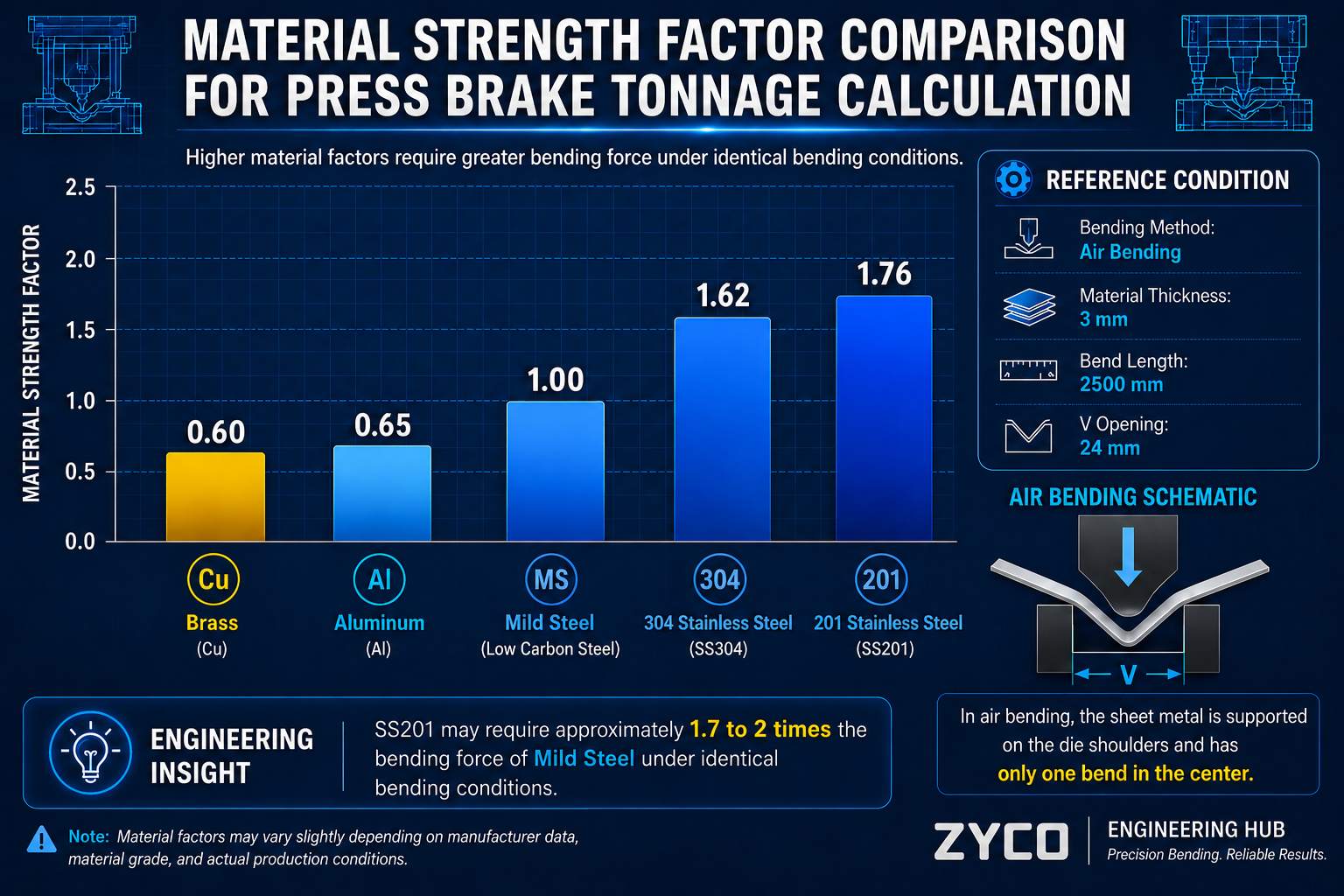
Figure 2. Material strength factor comparison for press brake tonnage calculation. Higher material factors require greater bending force under identical bending conditions.
Not all materials require the same bending force.
The primary reason is variation in yield strength.
The material factors used in the ZYCO Engineering Hub are:
These factors reflect practical production conditions and allow engineers to estimate force requirements more accurately.
For example:
A stainless steel component may require more than 60% additional force compared with an equivalent mild steel component.
This difference becomes increasingly important as thickness and bend length increase.
|
Important thickness note If V-opening remains fixed, bending force follows the squared effect of thickness. In practical air bending, however, the recommended V-opening often increases with thickness. When V-opening follows the 8T rule, a 6 mm mild steel sheet may require approximately two times the force of a 3 mm sheet under the same bend length. |
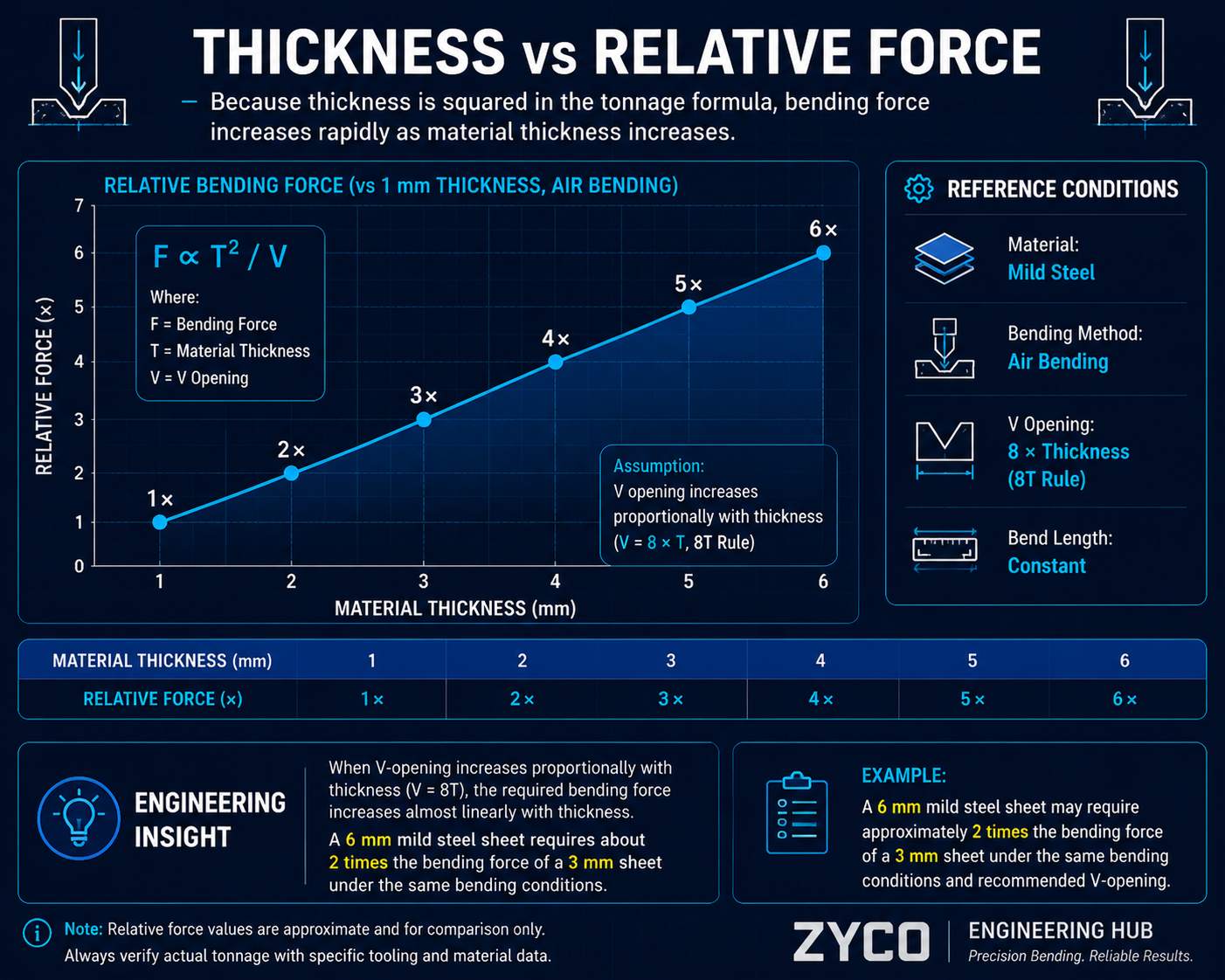
Figure 3. Thickness vs relative force when the V-opening increases proportionally with thickness under the 8T rule.
Material thickness is generally the most influential variable in bending calculations.
Because thickness is squared in the formula, force requirements increase rapidly as thickness increases.
One of the most common misconceptions in fabrication is that doubling thickness doubles force requirements.
In reality:
Increasing thickness from 3 mm to 6 mm increases force approximately tow times.
This explains why heavy plate applications require dramatically larger machines than light-gauge sheet metal applications.
Many fabrication shops comfortably bend 3 mm mild steel on machines below 100 tons. However, when thickness increases to 10 mm, 12 mm, or 16 mm, machine requirements change dramatically.
Thickness should therefore be evaluated carefully during quotation, process planning, machine selection, and tooling selection.
While thickness often receives the most attention, bend length frequently determines actual machine requirements.
The relationship between bend length and tonnage is linear.
As bend length increases, force requirements increase proportionally.
For example:
A component requiring approximately 25 tons at 1000 mm bend length may require approximately 75 tons at 3000 mm bend length.
This principle explains why many fabrication facilities require long-bed press brakes even when processing relatively thin materials.
Engineers should always evaluate:
Material thickness
Bend length
Machine working length
as a complete system rather than independent variables.
The interaction between these variables often determines whether a bending operation can be performed efficiently and safely.
Table 2. Practical V-opening selection guide
|
Thickness Range |
Typical V-Opening Rule |
Engineering Purpose |
|
Below 8 mm |
Approximately 8T |
General air bending and common production |
|
8-25 mm |
Approximately 10T |
Reduce load and improve tooling life |
|
Above 25 mm |
Approximately 12T |
Heavy plate bending and lower force concentration |
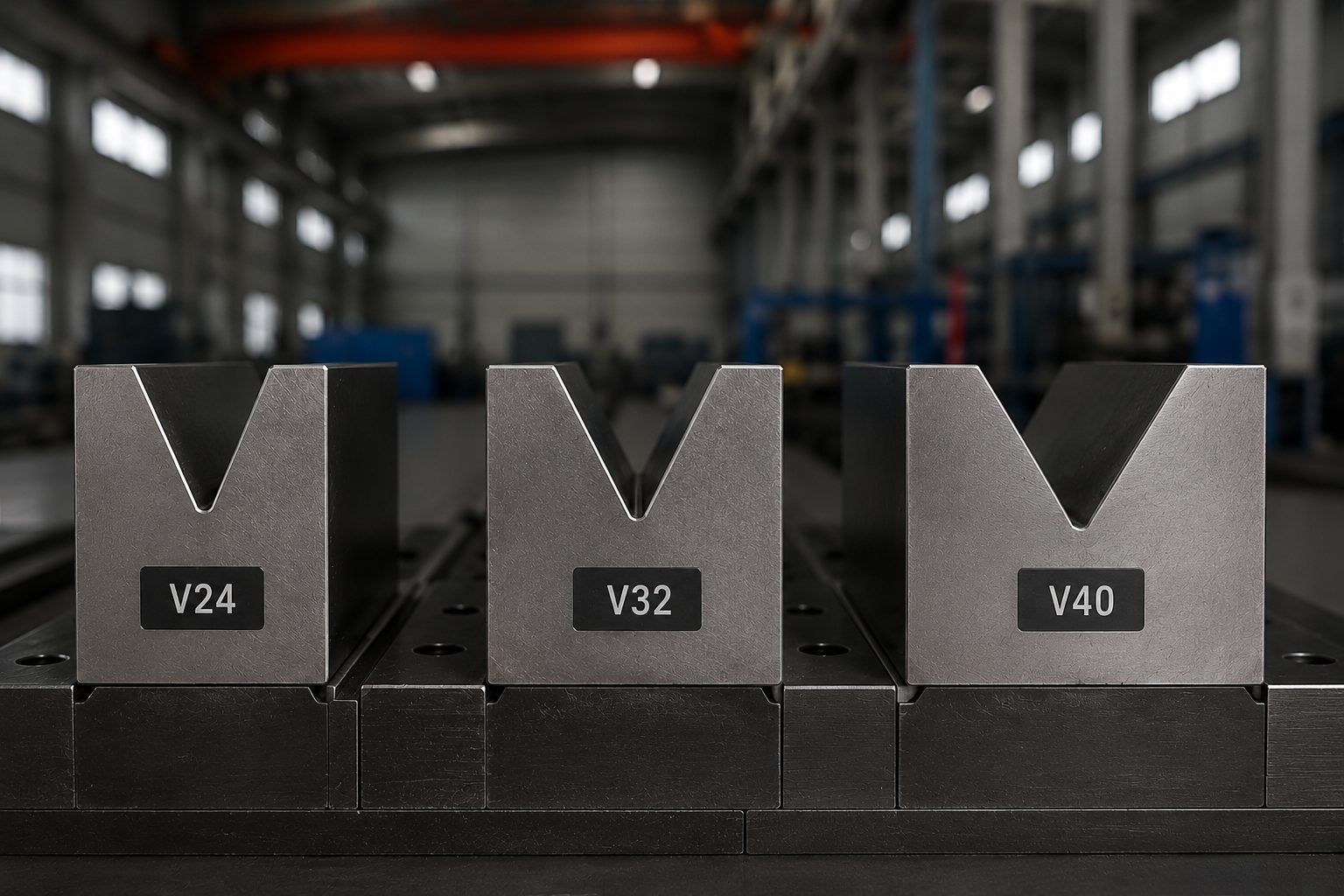
Figure 4. V24, V32 and V40 die examples showing how V-opening size changes tooling selection and bending behavior.
V-opening selection has a direct influence on bending force requirements and is one of the most important variables under the engineer's control.
In general:
Larger V-openings reduce tonnage requirements.
Smaller V-openings increase tonnage requirements.
This occurs because wider dies distribute deformation over a larger area, reducing the amount of force required to bend the material.
The practical recommendations used throughout the ZYCO Engineering Hub are:
These recommendations provide a balance between:
Force requirements
Tool life
Bend radius
Springback control
Production efficiency
Many operators attempt to reduce springback by selecting a smaller V-opening. While this can improve angle control, it also increases force requirements significantly.
For this reason, V-opening selection should always be evaluated together with machine capacity and tooling availability.
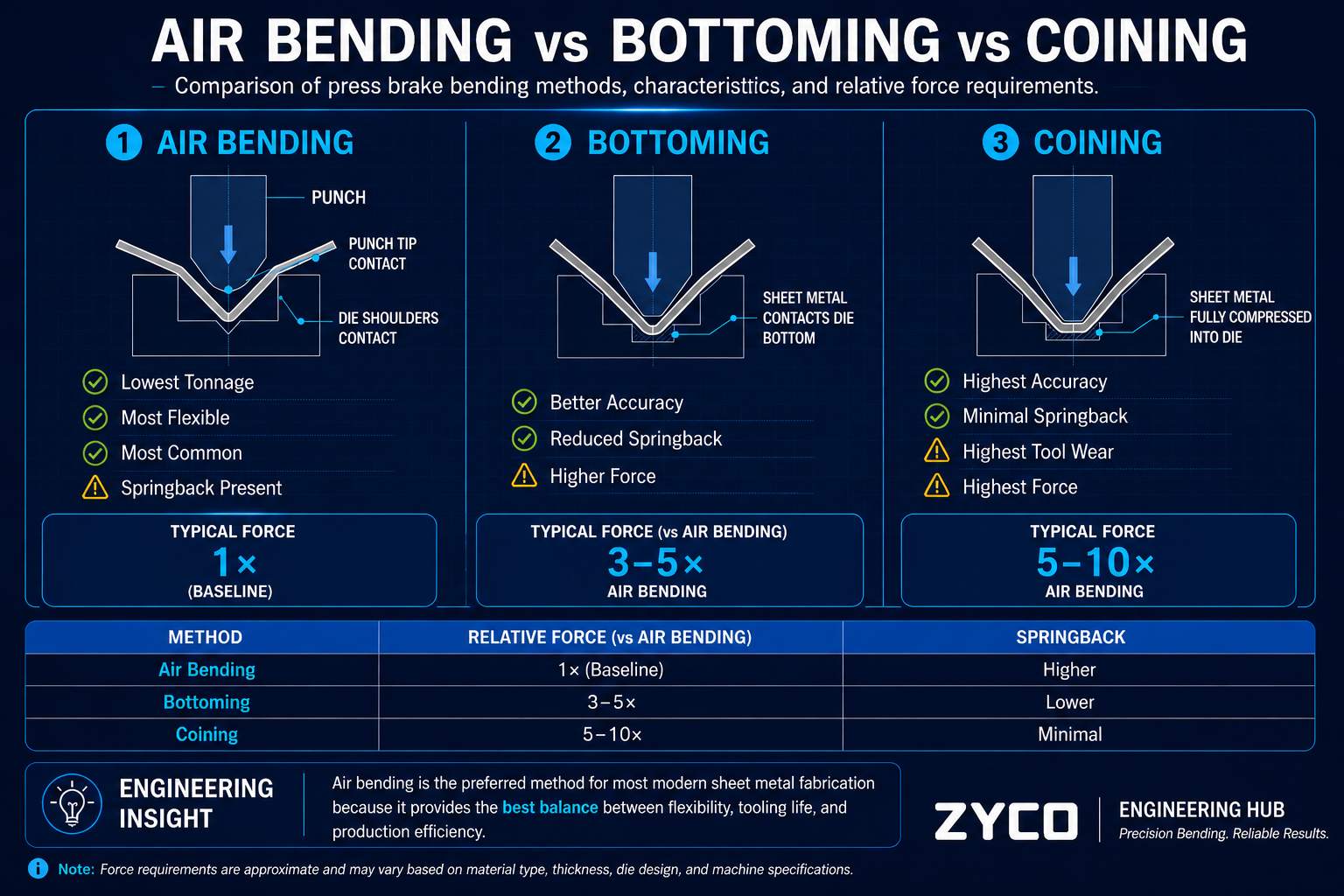
Figure 5. Comparison of air bending, bottoming and coining. Air bending requires the least force, while coining requires the highest force and tooling pressure.
The bending method used has a major influence on required force.
Many force charts fail to specify which bending method they assume, creating confusion during machine selection.
Air Bending
Air bending remains the most common bending method in modern fabrication.
Advantages include:
Lower force requirements
Flexible tooling selection
Reduced tooling inventory
Faster setup
Because the material only contacts the punch tip and die shoulders, significantly less force is required.
Bottoming
Bottoming forces the material deeper into the die cavity.
Advantages:
Improved angle consistency
Reduced springback
Disadvantages:
Higher force requirements
Increased tooling wear
Bottoming may require several times more force than equivalent air-bending operations.
Coining
Coining uses extremely high pressure to permanently reshape the material at the bend line.
Advantages:
Maximum angle accuracy
Minimal springback
Disadvantages:
Extremely high force requirements
Higher tooling stress
Increased operating costs
For most fabrication environments, air bending remains the most practical and economical solution.
Tonnage calculation does not replace springback evaluation. In air bending, the programmed angle and the final angle may differ after pressure is released. This is especially important when bending stainless steel, aluminum and precision components that require tight angle control.
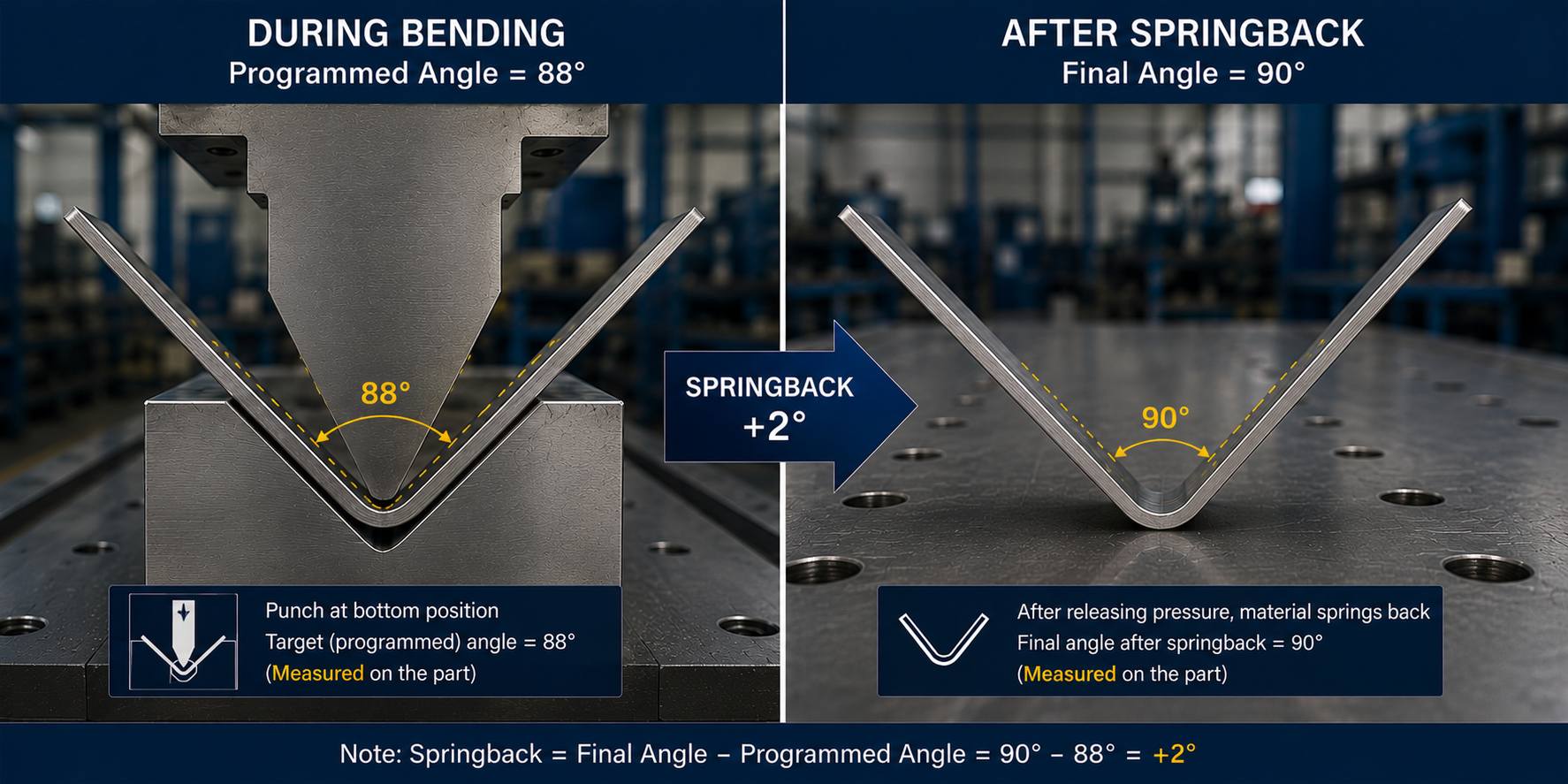
Figure 6. Springback compensation example showing the relationship between programmed bending angle and final angle after pressure release.
|
Material |
Application |
Thickness |
Length |
V-Opening |
Estimated Force |
Key Consideration |
|
Mild Steel |
Standard Sheet Metal Part |
3 mm |
2500 mm |
V24 |
63–64 Tons |
Benchmark case for tonnage calculation |
|
SS304 |
Decorative Stainless Steel Panel |
3 mm |
2500 mm |
V24 |
Higher than mild steel |
Consider springback compensation |
|
SS201 |
Kitchen Equipment Component |
3 mm |
2500 mm |
V24 |
Higher than SS304 |
Higher yield strength requires more force |
|
Aluminum |
Enclosure Manufacturing |
4 mm |
3000 mm |
V32 |
Lower than steel |
Lower material factor reduces tonnage |
|
Mild Steel |
Agricultural Reinforcement |
6 mm |
3200 mm |
— |
High force demand |
Long bending length increases tonnage |
|
SS304 |
Elevator Panel |
— |
— |
— |
Depends on tooling |
Surface protection is critical |
|
Carbon Steel |
Heavy Structural Part |
12 mm |
— |
Large V |
Reduced force with proper tooling |
Larger V-opening improves efficiency |
|
Various Metals |
Machinery Cover |
— |
— |
Optimized V |
Reduced machine load |
Correct tooling improves productivity |
Table 3. Continuous production load ratio guide
|
Load Ratio |
Production Meaning |
|
<=85% |
Ideal production range |
|
85-90% |
Acceptable production range |
|
90-92% |
Heavy production range - monitor condition |
|
>92% |
Select the next machine size |
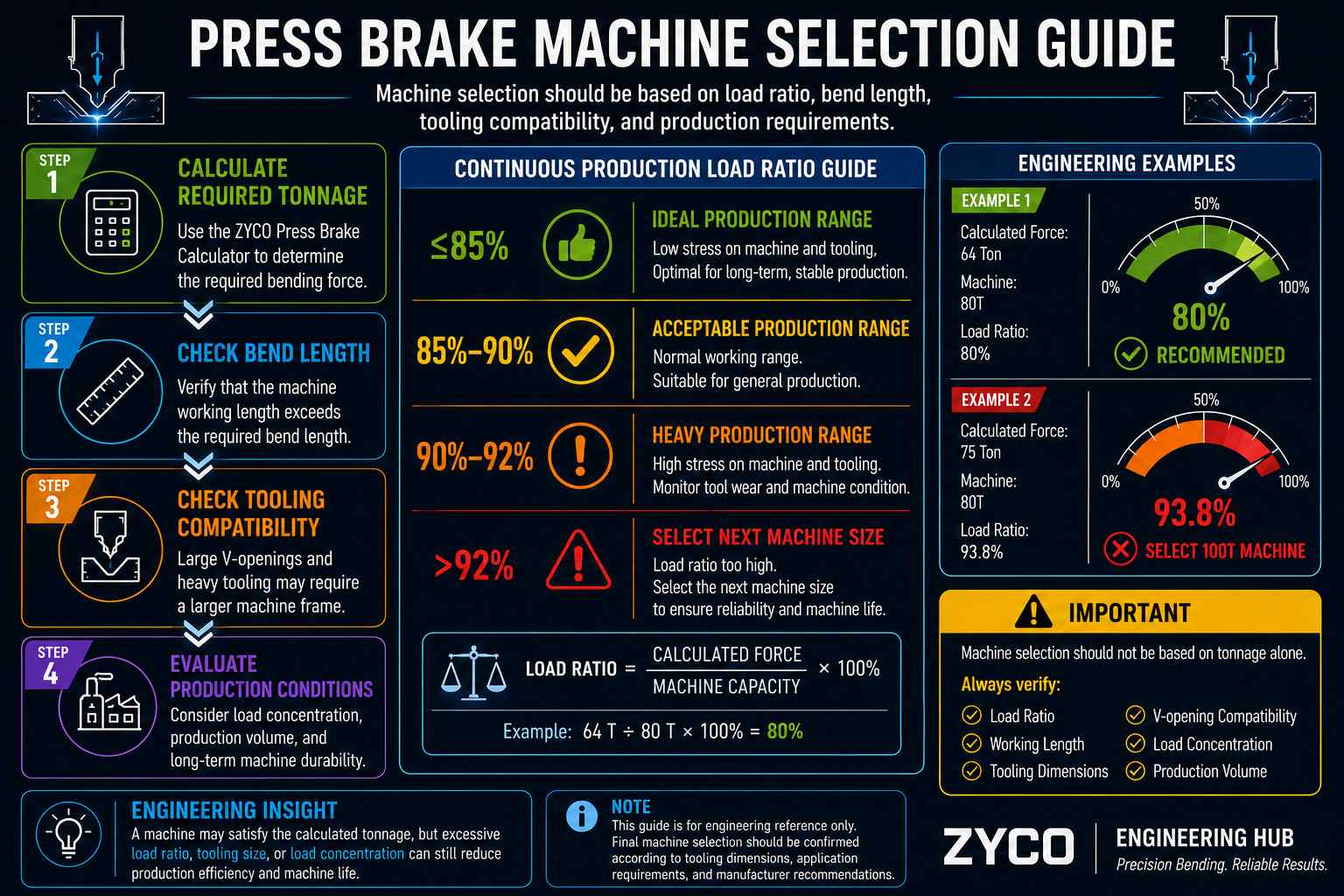
Figure 7. Press brake machine selection guide based on load ratio, bend length, tooling compatibility and production requirements.
Selecting a machine involves more than matching theoretical tonnage requirements.
Professional fabrication shops evaluate:
Future production requirements
Tooling flexibility
Safety margins
Material variation
Production volume
Typical machine selection ranges include:
A machine that barely satisfies current requirements may limit future production opportunities.
Many tonnage guides stop after force calculation.
Experienced fabrication engineers know that successful bending operations require additional evaluation.
Consider:
Material: 16 mm Mild Steel
Length: 600 mm
V-opening: 160 mm
Calculated Force: Approximately 64 Tons
At first glance, an 80-ton press brake appears sufficient.
However, the force calculation does not answer several critical questions:
Can the machine physically accommodate a V160 die?
Is there sufficient daylight opening?
Is the machine stroke adequate?
Can the tooling be installed safely?
Although the required force is relatively modest, tooling requirements may exceed the practical capabilities of the machine.
This example illustrates why tonnage alone should never determine machine suitability.
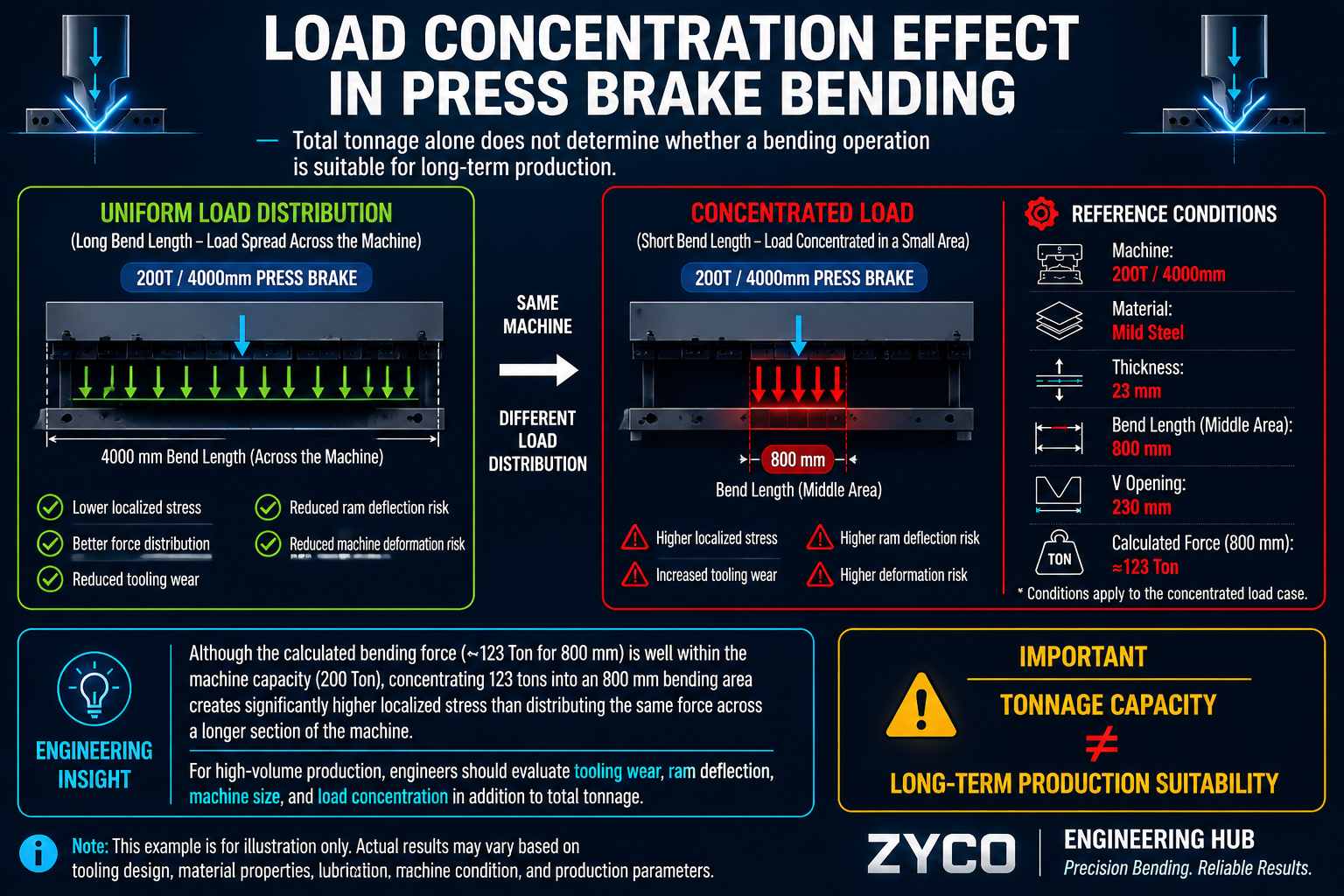
Figure 8. Load concentration effect in press brake bending. Localized force can increase tooling wear and machine stress even when total tonnage is within rated capacity.
Load concentration is one of the most overlooked factors in heavy bending applications.
Consider:
Material: 23 mm Carbon Steel
Length: 800 mm
V-opening: 230 mm
Calculated Force: Approximately 123 Tons
Machine: 200T / 4000 mm
Many operators immediately conclude that the machine is suitable because the required force is below machine capacity.
However, the entire force is concentrated within only 800 mm of working length.
Potential consequences include:
Increased punch wear
Increased die wear
Higher crowning wear
Localized ram stress
Increased frame loading
This does not necessarily make the operation unsafe.
However, engineers should evaluate force distribution rather than focusing exclusively on total tonnage.
Two jobs may require identical tonnage calculations yet create very different engineering conditions.
Scenario A:
16 mm Carbon Steel
600 mm Bend Length
20 Parts Per Month
Scenario B:
16 mm Carbon Steel
600 mm Bend Length
500 Parts Per Day
The calculated force remains identical.
The equipment stress does not.
High production volumes increase:
Tool wear
Hydraulic temperature
Crowning wear
Ram fatigue
Maintenance requirements
This is why production frequency should always be considered alongside tonnage calculations.
The most successful fabrication facilities evaluate not only whether a machine can perform a bending operation, but also whether it can perform that operation repeatedly, efficiently, and profitably over the long term.
One of the most common mistakes made by inexperienced fabricators is assuming that calculated tonnage and actual production tonnage are always identical.
In reality, the tonnage produced by a calculation formula should be viewed as an engineering reference rather than an absolute production value.
Theoretical tonnage is calculated using known variables such as material thickness, bend length, V-opening size, and material strength. These calculations provide an excellent starting point for machine selection and process planning.
However, real-world production introduces additional variables that are difficult to represent mathematically.
These variables include:
Material batch variation
Yield strength variation
Tool wear
Machine condition
Crowning accuracy
Operator setup consistency
Ambient temperature
Lubrication conditions
For example, two sheets of SS304 purchased from different steel suppliers may both be labeled as 3 mm stainless steel. However, their actual yield strengths may vary enough to create noticeable differences in bending force requirements and springback behavior.
This is why experienced fabrication engineers rarely rely exclusively on formulas.
Instead, they use calculations to establish a safe starting point and then validate results through test bending.
Table 4. Traditional chart lookup vs digital calculator workflow
|
Traditional Method |
Digital Calculator Workflow |
|
Manual lookup |
Instant engineering calculation |
|
Limited variables |
Material, thickness, length and V-opening together |
|
Higher risk of manual error |
More consistent results |
|
Static chart |
Dynamic machine recommendation and validation |
Traditional tonnage charts remain useful references, but they were developed during a period when materials, machine controls, and production requirements were less complex than they are today.
Modern fabrication increasingly relies on digital engineering tools.
Digital calculators offer several advantages:
For example, a fabricator evaluating multiple V-opening options can instantly compare force requirements without manually consulting multiple charts.
This allows engineers to optimize bending processes more efficiently.
The transition from paper tonnage charts to engineering calculators is similar to the transition from manual machining calculations to modern CNC programming.
The objective is not to replace engineering judgment but to improve engineering decision-making.
The future of sheet metal fabrication is moving beyond simple tonnage calculation.
Modern engineering systems increasingly integrate:
Material databases
Bending force prediction
Springback prediction
Tooling recommendations
Production optimization
As artificial intelligence and digital manufacturing technologies continue to evolve, fabrication engineers will gain access to more advanced decision-support systems.
Future bending software may automatically evaluate:
Material properties
Tool selection
Machine capacity
Springback compensation
Production efficiency
before a single part is produced.
This trend does not eliminate the importance of engineering knowledge.
Instead, it increases the value of engineers who understand both theory and practical fabrication realities.
Even experienced operators occasionally make mistakes when estimating bending force.
The most common errors include:
Ignoring material factors.
Using incorrect V-openings.
Ignoring bend length.
Overlooking tooling compatibility.
Ignoring load concentration.
Selecting machines without safety margins.
Operating continuously at maximum load.
Neglecting springback behavior.
Using worn tooling.
Skipping sample bends.
Avoiding these mistakes improves reliability, reduces scrap, and extends equipment life.
The most successful fabrication facilities follow a consistent engineering process.
Recommended best practices include:
Verify material specifications before production.
Use recommended V-openings.
Perform sample bends.
Maintain tooling regularly.
Monitor springback behavior.
Avoid continuous maximum loading.
Document successful setups.
Review machine capacity before new projects.
Evaluate tooling compatibility.
Consider long-term equipment health.
These practices improve production consistency and reduce long-term operating costs.
1. What is press brake tonnage?
Press brake tonnage is the amount of force required to bend a sheet metal workpiece to a specified angle. In production, it is used to select a suitable press brake, avoid overload, protect tooling and maintain angle consistency. It should be treated as an engineering reference rather than a single isolated number.
2. How is press brake tonnage calculated?
Tonnage is calculated from material thickness, bend length, V-opening size and material factor. In the ZYCO Engineering Hub workflow, the reference formula is: Tonnage = (1.33 x T² x L x Material Factor) / (V x 20). This formula is intended for practical air-bending estimation.
3. Why does stainless steel require more bending force than mild steel?
Stainless steel normally has higher yield strength and stronger springback behavior than mild steel. Under the same thickness, bend length and V-opening, SS304 and SS201 usually require higher bending force and more careful springback compensation than low carbon steel.
4. Does V-opening affect tonnage?
Yes. A larger V-opening generally reduces required tonnage, while a smaller V-opening increases tonnage. However, V-opening also affects inside radius, flange length, springback and tooling compatibility, so it should not be selected only to reduce force.
5. Does bend length affect tonnage?
Yes. Bend length has a direct linear relationship with tonnage. If all other variables remain the same, doubling the bend length approximately doubles the required bending force. This is why long parts can require high-capacity machines even when the sheet is not very thick.
6. What happens if the calculated tonnage is too low?
If actual force demand exceeds available tonnage, the bend may be incomplete or inconsistent. Operators may see angle variation, excessive springback, repeated correction attempts and higher scrap rate. In severe cases, forcing the operation can stress the machine or tooling.
7. Can excessive tonnage damage tooling?
Yes. Excessive force can accelerate wear on punches and dies, increase the risk of tool deformation and create unnecessary stress on the hydraulic system and ram. Professional shops avoid using far more force than needed unless the process specifically requires it.
8. Why do calculated and actual production results differ?
Actual bending results are affected by material batch variation, true yield strength, tooling wear, lubrication, machine condition, crowning accuracy and operator setup. Calculators provide a strong starting point, but test bends and production validation are still important.
9. How much safety margin should be used when selecting a press brake?
For continuous production, ZYCO recommends checking the load ratio. A load ratio below 85% is preferred for stable production, 85-90% is acceptable, 90-92% requires caution, and above 92% generally suggests selecting the next machine size.
10. Can a machine with enough tonnage still be unsuitable?
Yes. A machine may meet the calculated tonnage but still be limited by daylight opening, stroke, tooling height, V-opening availability, working length, load concentration or production volume. This is why machine selection should never be based on tonnage alone.
11. Why is load concentration important?
Load concentration occurs when high bending force is applied over a short section of a long machine. Even if total tonnage is within rated capacity, localized force can increase tooling wear, ram stress and deformation risk during long-term or high-volume production.
12. Does bending method affect tonnage?
Yes. Air bending normally requires the lowest force and offers the greatest flexibility. Bottoming requires higher force but reduces springback. Coining requires the highest force and can improve angle accuracy, but it also increases tooling and machine stress.
13. What happens if the V-opening is too small?
A V-opening that is too small increases required force and may cause surface marks, excessive tool load, small inside radius or cracking in some materials. For most air-bending applications, recommended V-opening rules such as 8T, 10T or 12T provide a safer starting point.
14. Should production frequency be considered?
Absolutely. A one-time bending job and a high-volume daily production job can have the same calculated tonnage but very different equipment impact. High production frequency increases tool wear, heat, maintenance demand and machine fatigue risk.
15. What is the easiest way to calculate press brake tonnage?
The easiest method is to use a dedicated engineering calculator such as the ZYCO Press Brake Calculator. It allows users to input material, thickness, bend length and V-opening, then review tonnage, inside radius, recommended machine and engineering reference data in one workflow.
Readers interested in further bending engineering knowledge may also benefit from:
Press Brake Calculator
Material Database
Springback Database
Springback Compensation Guide
V Die Selection Tool
V Opening Guide
Tooling Selection Guide
Air Bending Guide
Bend Deduction Guide
K-Factor Guide
Press Brake Tonnage Guide
These resources provide deeper technical information and practical guidance for fabrication engineers.
Press brake tonnage calculation is not simply a mathematical exercise.
It is a critical engineering process that influences machine safety, tooling life, bend accuracy, production efficiency, and long-term equipment reliability.
While formulas provide the foundation, successful fabrication operations go beyond theoretical calculations.
Experienced engineers evaluate material properties, bend length, V-opening selection, tooling compatibility, load distribution, production frequency, and machine capacity before approving a bending process.
The most reliable production environments combine accurate calculations with practical manufacturing experience.
Ultimately, tonnage should be viewed not as a single number, but as part of a complete bending engineering strategy.
ZYCO provides press brakes, shearing machines, fiber laser cutting machines, plate rolling machines and engineering resources for sheet metal manufacturers worldwide. The ZYCO Engineering Hub is designed to support engineers, operators and buyers with practical bending knowledge, calculation tools and production guidance.

Leave your email address and requirements, our professional sales team will develop the most suitable solution for you.


Copyright © 2026 Nanjing Zyco Cnc Machinery Co., Ltd. All Rights Reserved.
 Network Supported
 English
 français
 Deutsch
 italiano
 русский
 português
 español
 한국의
한국의 Türkçe
 العربية