
Plate rolling machines are essential in metal fabrication, used to bend flat metal sheets into cylindrical or curved shapes. Among the most common types are 3-roll and 4-roll plate rolling machines.
While both machines perform similar functions, they differ significantly in structure, working method, precision, and efficiency. Understanding these differences helps manufacturers select the right machine for their production needs.
A 3-roll plate rolling machine uses three rollers to bend metal plates. It typically comes in two main types:
· Symmetrical (Initial Pinch Type)
· Asymmetrical (Double Pinch Type)
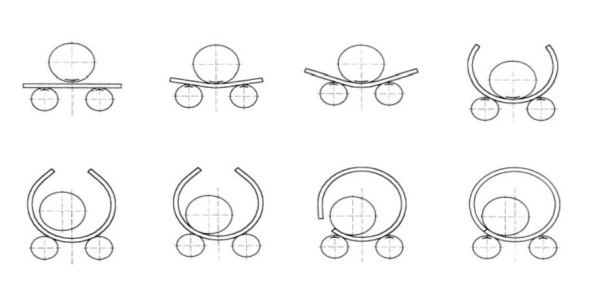
· The plate is fed between the rollers
· The rolls rotate to move the plate
· The top or side rolls apply pressure to create curvature
· Requires manual alignment
· Pre-bending often needs multiple passes
· Operator skill heavily affects results
3-roll machines are widely used due to their simple structure and lower cost.
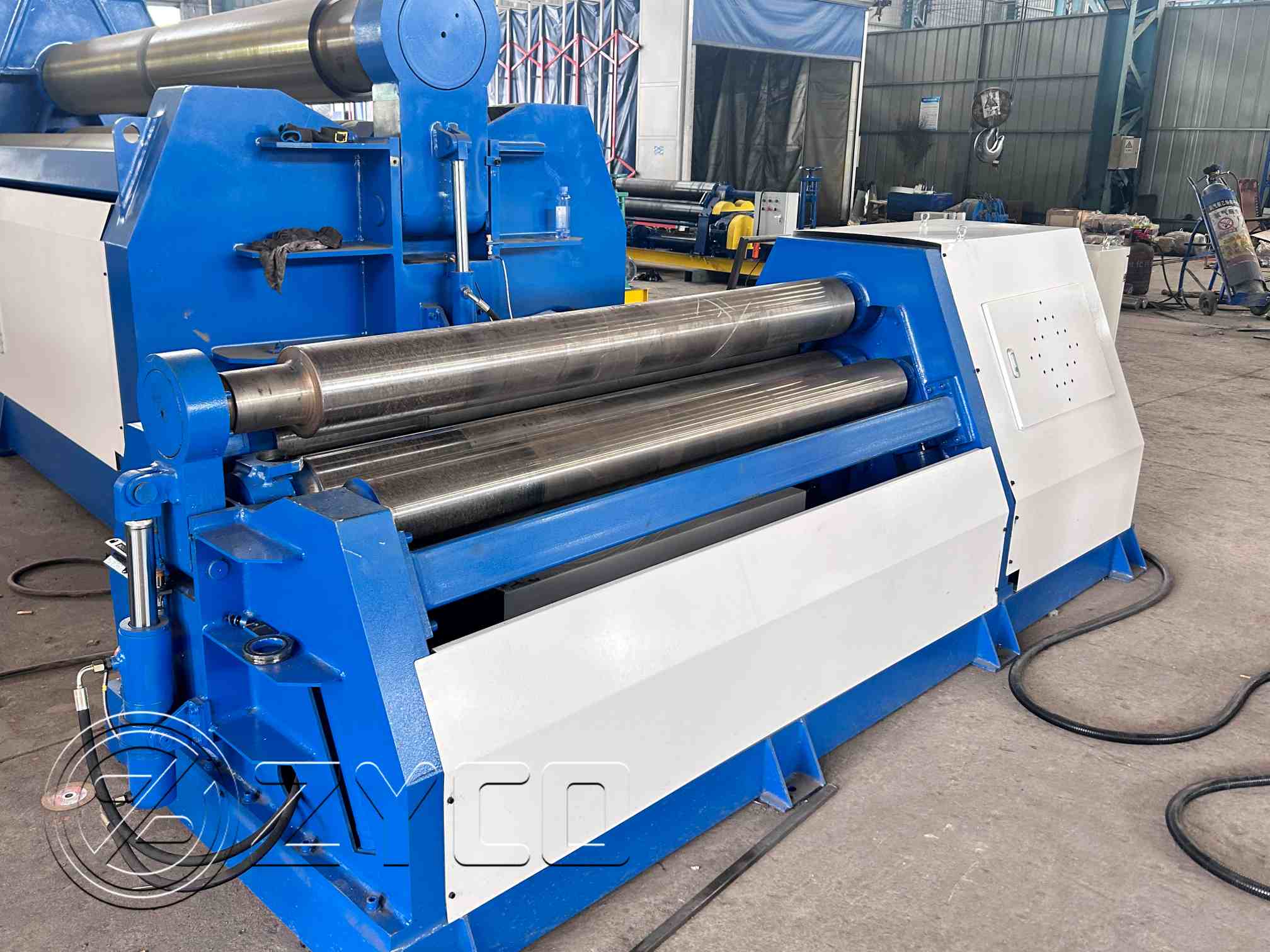
A 4-roll plate rolling machine adds an extra roller, enabling more advanced functionality and automation.
· Top roll (main drive)
· Bottom roll (pinch and feed)
· Two side rolls (bending control)
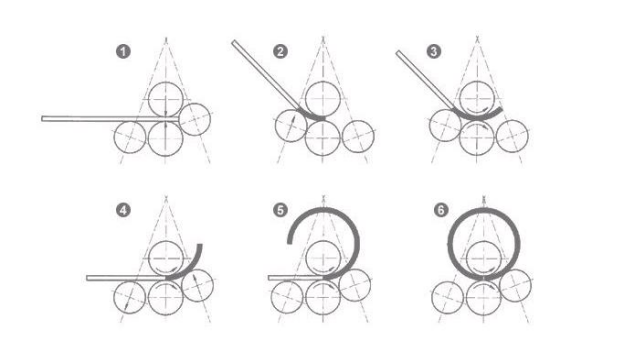
· The plate is clamped between top and bottom rolls
· Side rolls move to perform pre-bending
· Continuous rolling forms the desired shape
· Automatic plate clamping
· One-pass pre-bending
· Higher precision and repeatability
4-roll machines are ideal for high-efficiency and high-accuracy production environments.
|
Feature |
3-Roll Machine |
4-Roll Machine |
|
Number of rolls |
3 |
4 |
|
Plate clamping |
Limited |
Strong (top + bottom roll) |
|
Pre-bending |
Limited |
Yes (both ends) |
|
Accuracy |
Moderate |
High |
|
Automation |
Lower |
High (CNC) |
|
Operation |
More manual |
Easy |
|
Efficiency |
Medium |
High |
The additional roll in a 4-roll machine allows for better control and stability during rolling.
· 3-Roll Machine:
Requires repositioning and multiple operations
· 4-Roll Machine:
Can pre-bend both ends in one setup
This is one of the biggest advantages of 4-roll machines, reducing flat edges and improving efficiency.
· 3-Roll: Moderate accuracy, depends on operator skill
· 4-Roll: High precision with consistent results
4-roll machines provide better roundness and dimensional control, especially for thick plates.
· 3-Roll Machine:
o More manual adjustments
o Higher skill requirement
· 4-Roll Machine:
o Easier to operate
o CNC automation available
o Less operator dependency
Modern CNC 4-roll machines significantly reduce training time.
· 3-Roll: Slower, requires multiple passes
· 4-Roll: Faster, single-cycle processing
For large-scale production, 4-roll machines offer higher throughput and reduced labor costs.
· 3-Roll Machine:
Lower initial cost
Suitable for small workshops
· 4-Roll Machine:
Higher investment
Better long-term ROI
Companies focused on automation and productivity often choose 4-roll machines despite the higher upfront cost.
3-roll machines are still widely used due to:
· Lower purchase cost
· Simple structure and maintenance
· Suitable for light to medium workloads
· Ideal for small-scale fabrication shops
4-roll machines provide advanced benefits:
· One-time plate positioning
· High-precision rolling
· Reduced material waste
· Faster production cycles
· Easy integration with CNC systems
They are the preferred choice for industrial-scale manufacturing and high-precision applications.
· You have a limited budget
· Production volume is low
· Products do not require high precision
· Skilled operators are available
· You need high accuracy and consistency
· Production efficiency is critical
· You process thick or large plates
· You want automation and CNC control
Both machines are widely used in:
· Steel structure fabrication
· Pressure vessel manufacturing
· Shipbuilding
· Oil & gas industry
Leave your email address and requirements, our professional sales team will develop the most suitable solution for you. Copyright © 2026 Nanjing Zyco Cnc Machinery Co., Ltd. All Rights Reserved.
 Contact Us
Subscribe
About us
Nanjing ZYCO CNC Machinery Co., Ltd. was established in 2013. It is a comprehensive machine tool industry enterprise integrating automatic control system design, new product research and development, and equipment manufacturing innovation platform. Our products are strictly produced in accordance with the lSO9001 international quality certification system and CE certification standards. With strong technical innovation capabilities as support, we sincerely provide users with excellent and applicable products and services.
Contact Us
Subscribe
About us
Nanjing ZYCO CNC Machinery Co., Ltd. was established in 2013. It is a comprehensive machine tool industry enterprise integrating automatic control system design, new product research and development, and equipment manufacturing innovation platform. Our products are strictly produced in accordance with the lSO9001 international quality certification system and CE certification standards. With strong technical innovation capabilities as support, we sincerely provide users with excellent and applicable products and services.


 Hot Tags
Contact Us
Address : MINGJUE INDUSTRY AREA, SHIQIUTOWN, LISHUI DISTRICT, NANJING CITY,CHINA
Hot Tags
Contact Us
Address : MINGJUE INDUSTRY AREA, SHIQIUTOWN, LISHUI DISTRICT, NANJING CITY,CHINA
 Network Supported
Leave A Message
Are you interested in collaborating and working with us? Please don't hesitate to contact us.
Network Supported
Leave A Message
Are you interested in collaborating and working with us? Please don't hesitate to contact us.
 English
 français
 Deutsch
 italiano
 русский
 português
 español
 한국의
한국의 Türkçe
 العربية